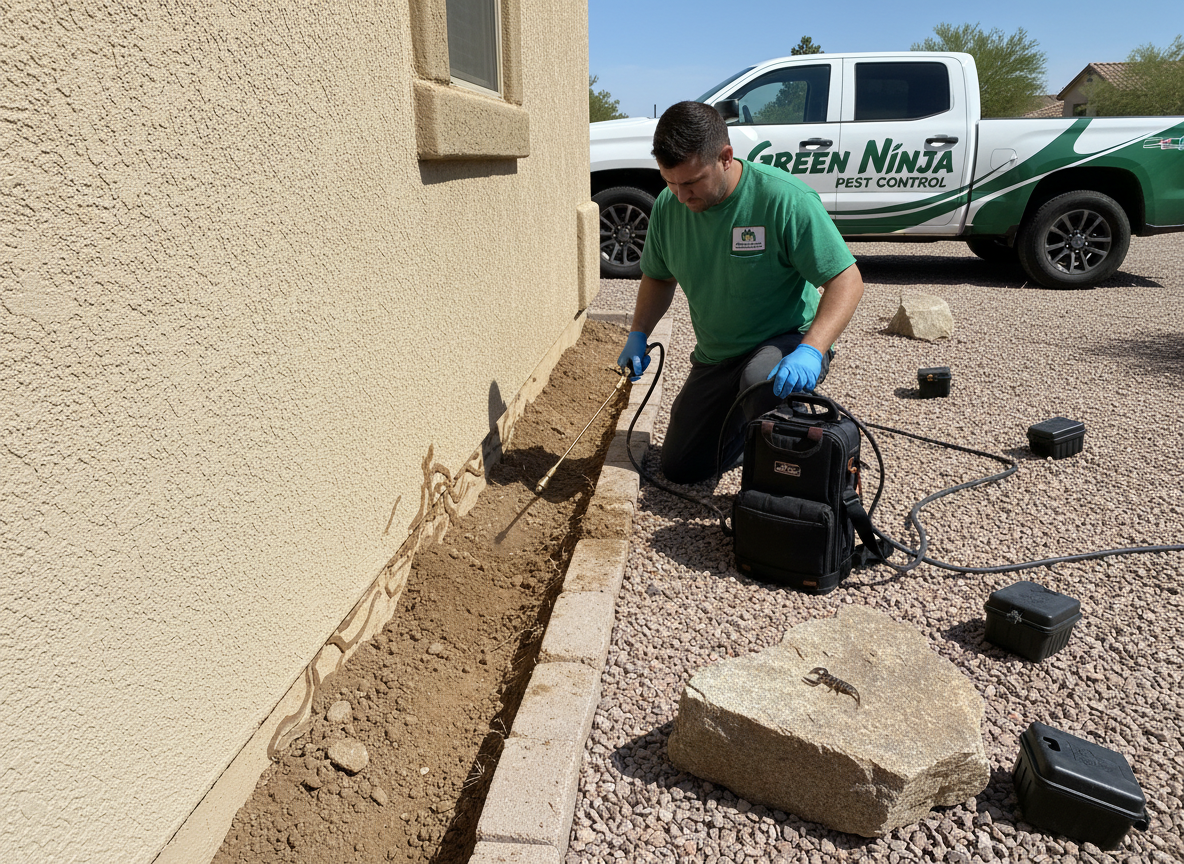
Mesa homes in neighborhoods like Red Mountain and Superstition Springs often sit on older lots where subterranean termites travel along irrigation lines and foundation cracks. Extreme summer heat above 110 degrees forces treatment crews to schedule early morning or evening applications so liquid barriers do not flash-dry before they reach the soil. Technicians drill into concrete slabs common in Maricopa County construction and inject non-repellent termiticides that create a treated zone lasting several years even when monsoons briefly raise soil moisture.
Drywood termites appear frequently in single-family homes near the Mesa Arts Center and Riverview Park because these older structures contain untreated wood trim and attic voids that stay warm year-round. Spot treatments using borate dust or foam reach colonies inside walls without tenting the entire house, which matters when properties sit close to neighboring homes in Downtown Mesa. Crews always check for moisture from evaporative coolers, a common local water source that draws drywood activity into roof eaves.
Pre-treatment of new additions or repairs requires coordination with city permitting in Mesa so soil treatment occurs before concrete is poured. Follow-up inspections at six and twelve months catch any missed galleries along property lines that border desert washes feeding into the Superstition Mountains. Homeowners in Tempe and Phoenix often request the same protocol when they notice mud tubes after rare heavy rains that push colonies toward irrigated yards.
Technician insight
In Mesa, the thing that catches most people out with Termite Treatment is how older Red Mountain homes on raised lots often have hidden galleries running along evaporative cooler lines that standard perimeter sprays miss until the colony has already spread into attic framing.
Subterranean Activity in Superstition Springs
A homeowner noticed mud tubes along the garage slab after monsoon rains. Inspection revealed foraging tubes traveling from a nearby wash into the foundation. Bait stations were installed along the east property line and liquid termiticide was injected at the slab edge. Follow-up visits confirmed no new activity within six months.
Termite Treatment Services We Offer
✓Subterranean Termite Baiting
Installs monitoring stations around the foundation perimeter to intercept colonies traveling through Maricopa County soil before they reach wood framing.
✓Drywood Termite Spot Treatment
Applies targeted dust or foam directly into active galleries inside walls and attics without requiring full-structure fumigation.
✓Wood Treatment Application
Treats exposed beams, baseboards, and door frames with borate preservatives that deter both drywood and subterranean species common in Mesa heat.
✓Slab Injection Treatment
Drills through concrete floors and patios to create a continuous chemical barrier under homes built on typical Red Mountain lots.
✓Termite Monitoring System Setup
Places in-ground stations along property lines near irrigation and washes to provide early detection in Superstition Springs neighborhoods.
How it works
- 1
Detailed Property Inspection
Technicians examine crawl spaces, attic voids, and foundation perimeters for mud tubes and damaged wood while noting irrigation and evaporative cooler locations.
- 2
Species Identification
Samples are collected to distinguish drywood from subterranean activity so the correct product and placement method are chosen for Mesa conditions.
- 3
Targeted Treatment Application
Bait stations, liquid barriers, or spot dusts are placed according to findings, with timing adjusted for extreme daytime temperatures.
- 4
Follow-Up Monitoring
Return visits at set intervals verify colony elimination and adjust stations as needed before seasonal monsoon moisture arrives.
Pricing
Pricing depends on property size, construction type, and whether drywood or subterranean colonies are active; call for an upfront quote based on inspection.