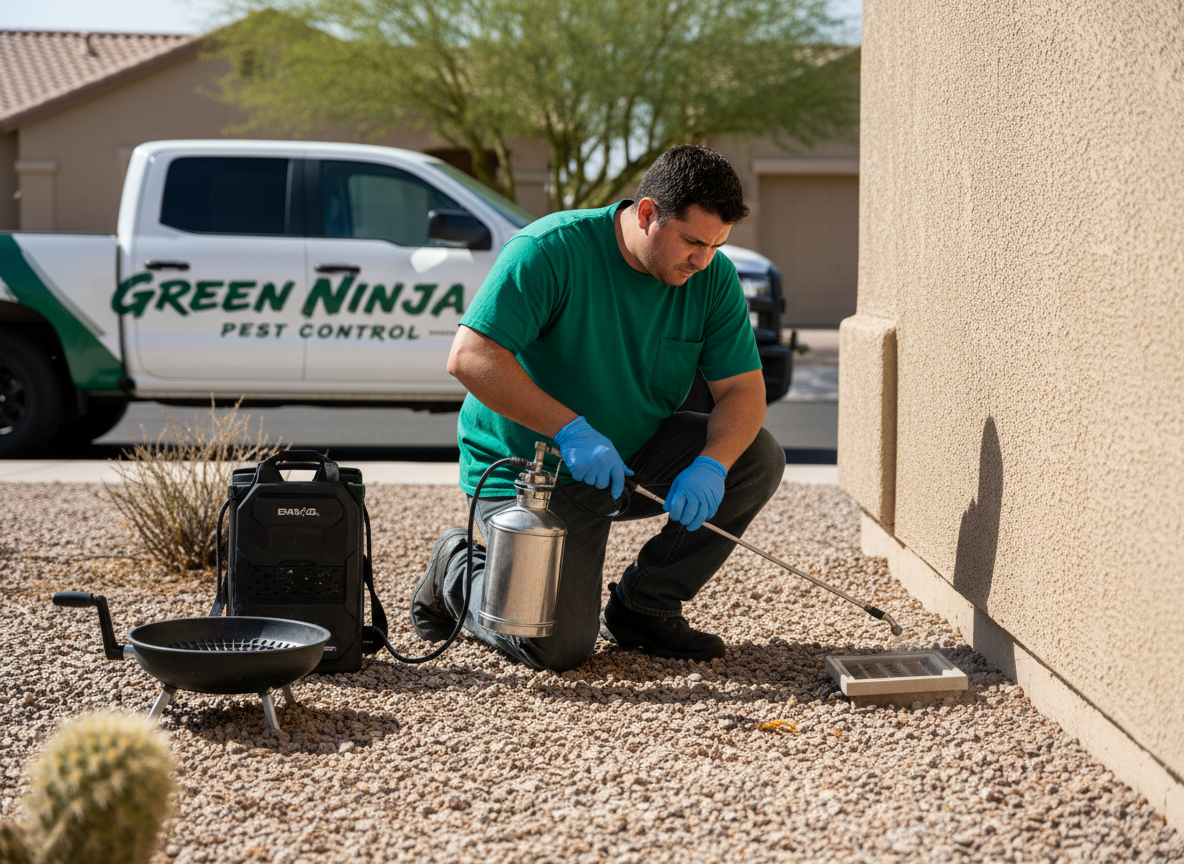
Mesa's hot desert climate pushes bark scorpions inside once summer temperatures climb above 110 degrees. Homes in Red Mountain and Superstition Springs often sit on rocky soil where scorpions shelter during the day and enter at night through foundation cracks or utility penetrations. Technicians focus on residual treatments around the slab edge and weep holes while checking for harborage in stacked rocks or irrigation boxes common in Maricopa County yards.
Older housing stock in Downtown Mesa features stucco exteriors and attached garages that create perfect scorpion runways. Treatments use gel baits and dusts in wall voids rather than broad sprays that wash away in monsoon rain. Edge cases include scorpions entering through attic vents on single-story homes near Riverview Park where tree cover keeps soil moist longer than open desert lots.
Perimeter work must account for proximity to the Superstition Mountains where scorpions migrate during drought. Crews inspect under AC units and around pool decks because standing water draws prey insects that in turn attract scorpions. Homeowners in Tempe and Phoenix border areas sometimes see crossovers from untreated neighboring lots, requiring coordination on shared fence lines.
All work follows Arizona structural pest control guidelines for desert species. Follow-up visits target second-instar bark scorpions that survive initial treatments because they require less moisture. Property age, irrigation type, and proximity to wash beds directly change the product choice and application volume used on each job.
Technician insight
In Mesa the thing that catches most people out with Scorpion Control is irrigation boxes sitting right against the stucco on 1980s Red Mountain homes. The constant moisture plus the rocky soil lets bark scorpions breed within a foot of the foundation, and a single missed box can restart the whole problem after the first treatment.
Scorpion Entry Through Garage Slab
A single-story home in Downtown Mesa had nightly scorpions appearing in the master bathroom. Inspection found a gap under the garage slab where the original plumbing entered. We dusted the void, treated the perimeter, and sealed the opening with backer rod and caulk. No further sightings after the second visit.
Scorpion Control Services We Offer
✓Bark Scorpion Perimeter Treatment
Applies residual barriers around foundations and entry points to stop bark scorpions from entering Mesa homes during peak summer heat.
✓Attic and Wall Void Dusting
Places desiccant dusts in attics and wall voids where scorpions hide during the day in older Downtown Mesa and Red Mountain houses.
✓Irrigation and Landscape Inspection
Checks sprinkler boxes, rock piles, and drip lines that create scorpion harborage near Superstition Springs and Riverview Park properties.
✓Garage and Utility Entry Sealing
Seals gaps around pipes, doors, and vents that allow scorpions to move from attached garages into living spaces common in Mesa tract homes.
✓Commercial Scorpion Monitoring
Sets glue boards and quarterly inspections for businesses near Mesa Arts Center and along main corridors in Maricopa County.
How it works
- 1
Site Assessment
Technician walks the full perimeter, checks irrigation, rock features, and foundation cracks while noting proximity to washes or mountain foothills.
- 2
Targeted Application
Applies dusts in voids and residuals along the slab edge, focusing on entry points identified during the walk-through.
- 3
Exclusion Work
Seals accessible gaps around utilities and recommends homeowner fixes for larger openings or stacked materials against the house.
- 4
Follow-Up Visit
Returns in 10-14 days to place monitors and retreat any active areas before monsoon season increases scorpion movement.
Pricing
Pricing depends on home size, scorpion pressure, and whether follow-up visits are needed.