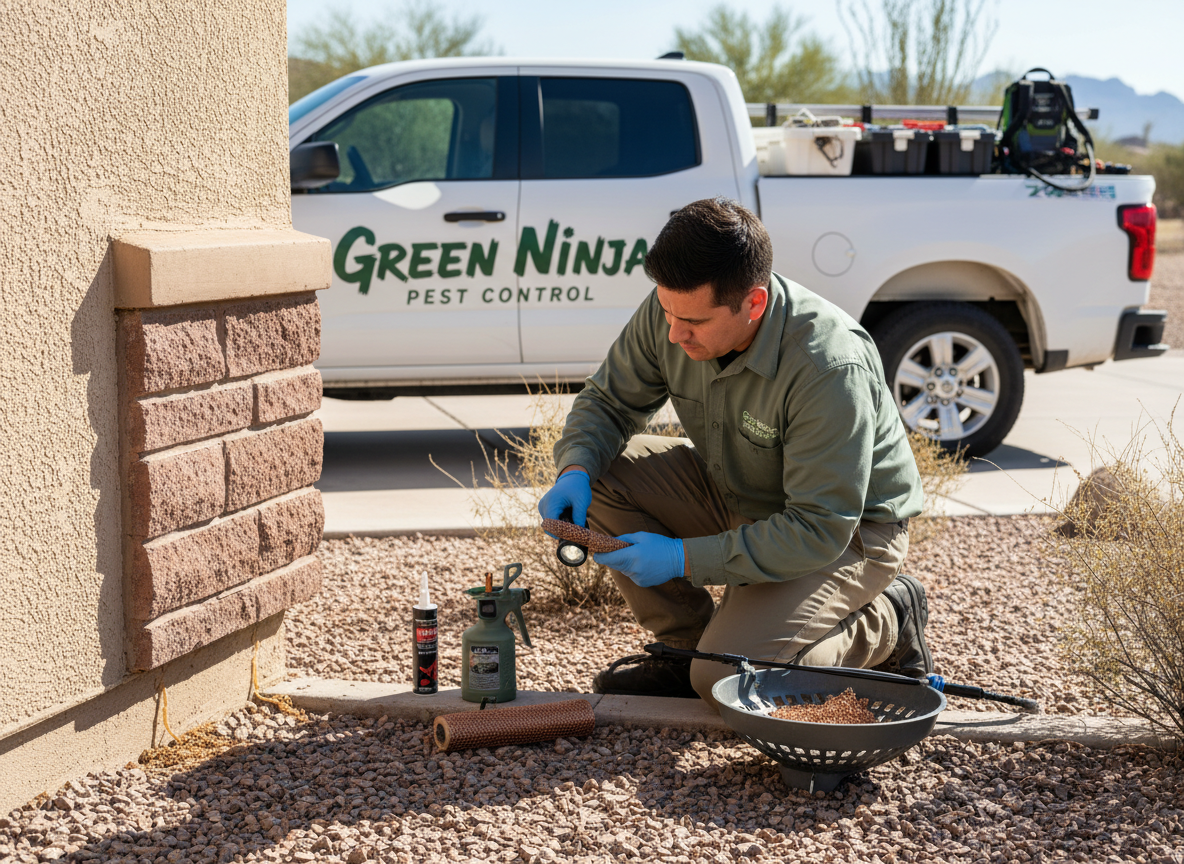
Commercial work begins with a site survey and a service plan written for the property, not a generic route stop. For a restaurant that means the kitchen line, dish pit, dry storage, floor drains, the dumpster pad and the back door. For a warehouse it means dock doors, pallet racks, break rooms and the perimeter bait station layout. For an apartment community it means the units, laundry rooms, trash enclosures, pool area and the block walls between buildings. For a medical or dental office it means treatment rooms, break rooms and the plumbing chases, with products and timing that fit patient hours. Each site gets a log of what was found, what was applied and where, which is what a county inspector, a corporate auditor or a property manager asks to see.
Arizona commercial properties carry the same desert pressure as homes with more openings and more people. Restaurants in Phoenix, Scottsdale, Tempe and Tucson deal with German cockroaches inside and sewer roaches through floor drains after monsoon rain, with fruit flies and drain flies in the dish pit. Warehouses in the Southwest Valley, Goodyear, Buckeye and Casa Grande get roof rats and pack rats through dock doors and Turkestan roaches at the slab edge. Apartment communities across the Valley run German roach and bed bug programs unit by unit. Medical offices and 55 and over community clubhouses need low odor products applied outside occupied hours. Yuma's food processing and agriculture add fly and rodent pressure, and Lake Havasu City and Bullhead City vacation rentals need turnover inspections.
Food establishments in Arizona are inspected by the county environmental health department, including Maricopa, Pima, Pinal, Yavapai, Yuma, Mohave, Coconino and Cochise counties, and the inspector looks at evidence of pests, sanitation, and whether pest control is being done by a licensed company with records. Green Ninja Pest Control works under an Arizona Department of Agriculture Pest Management Division license and provides a service log after every visit listing products, placement and findings. Bait stations are tamper resistant and numbered on a site map. Products in food areas are placed by the label, with gel baits and IGRs in cracks and voids rather than sprays near prep surfaces, and rodent control leans on trapping and exclusion so nothing dies in a wall above a dining room.
Commercial jobs fail for reasons that are not about the product. A dumpster enclosure that is never cleaned keeps flies and roaches on the property no matter what is applied. A dock door that stays open all night with no door sweep is a rodent entry no bait station fixes. A restaurant that gets a German roach treatment while the unit next door in the strip center is untreated gets reinfested through the shared wall. A property manager who is only told about a bed bug unit after 3 months of complaints is looking at 6 units instead of 1. Tenant cooperation on sanitation, a working relationship with the manager, and a technician who tells the truth about what the building needs are what make a commercial account hold.
Technician insight
In a strip center restaurant the roaches almost always come from the shared plumbing chase behind the dish pit, not from the front or the back door. If the technician has never opened the access panel behind the three compartment sink and looked at where the drain lines pass through the wall to the next tenant, the German roach program is treating the symptom.
Restaurant With a Health Inspection Coming Up
A restaurant in a strip center with German cockroaches in the dish pit and drain flies at the floor drains, 3 weeks before a scheduled county inspection. The site survey found the plumbing chase behind the sink open to the neighboring suite. Gel bait and IGR went into the chase and the line, the drains were treated and scrubbed, the chase opening was sealed with copper mesh and sealant, and a numbered bait station map was set up outside. The inspection passed and the property moved to monthly service with a log each visit.
Commercial Pest Control Services We Offer
✓Restaurant and Food Service Pest Control
Scheduled service for kitchens, dish pits, drains and dumpster pads with records that satisfy a county environmental health inspection.
✓Warehouse and Industrial Pest Control
Perimeter bait station layout, dock door rodent exclusion and interior roach and spider control for warehouses and distribution buildings.
✓Apartment and Multi Family Pest Control
Unit by unit German roach and bed bug programs, common area service, trash enclosure and pool area treatment for apartment communities.
✓Office and Medical Facility Pest Control
Low odor service scheduled outside patient and business hours for offices, dental practices, clinics and assisted living facilities.
✓HOA and Property Management Pest Control
Common area, clubhouse, pool and perimeter wall service for HOAs and managed communities, with reporting for the board or manager.
✓Retail and Strip Center Pest Control
Service coordinated across adjoining units in a strip center so a roach or rodent problem is not pushed from one tenant to the next.
✓Vacation Rental and Hotel Pest Control
Turnover inspections, bed bug checks and scheduled service for short term rentals and hotels in Scottsdale, Lake Havasu City, Bullhead City and Sedona side properties.
How it works
- 1
Site Survey
A technician walks the property with the manager, identifies pest pressure, entry points, sanitation issues and regulatory needs, and maps bait station and monitor locations.
- 2
Written Service Plan
You receive a plan with the service interval, products, placement map, response time commitment, what the property needs to do on its side, and the price.
- 3
Initial Service and Documentation
The first service is the heavy one, inside and out, and the first service log is delivered with product names, placements and findings.
- 4
Scheduled Service and Callbacks
Recurring visits on the agreed interval with a log each time, and callbacks between visits for tenant complaints or inspection findings.
Pricing
Commercial pricing is per visit on a service agreement and moves with square footage, the number of units or suites, the service interval, the number of bait stations and monitors, and the level of documentation required. A single restaurant on monthly service is a different number from a 200 unit apartment community with a bed bug program. The plan and the price are written after the site survey.