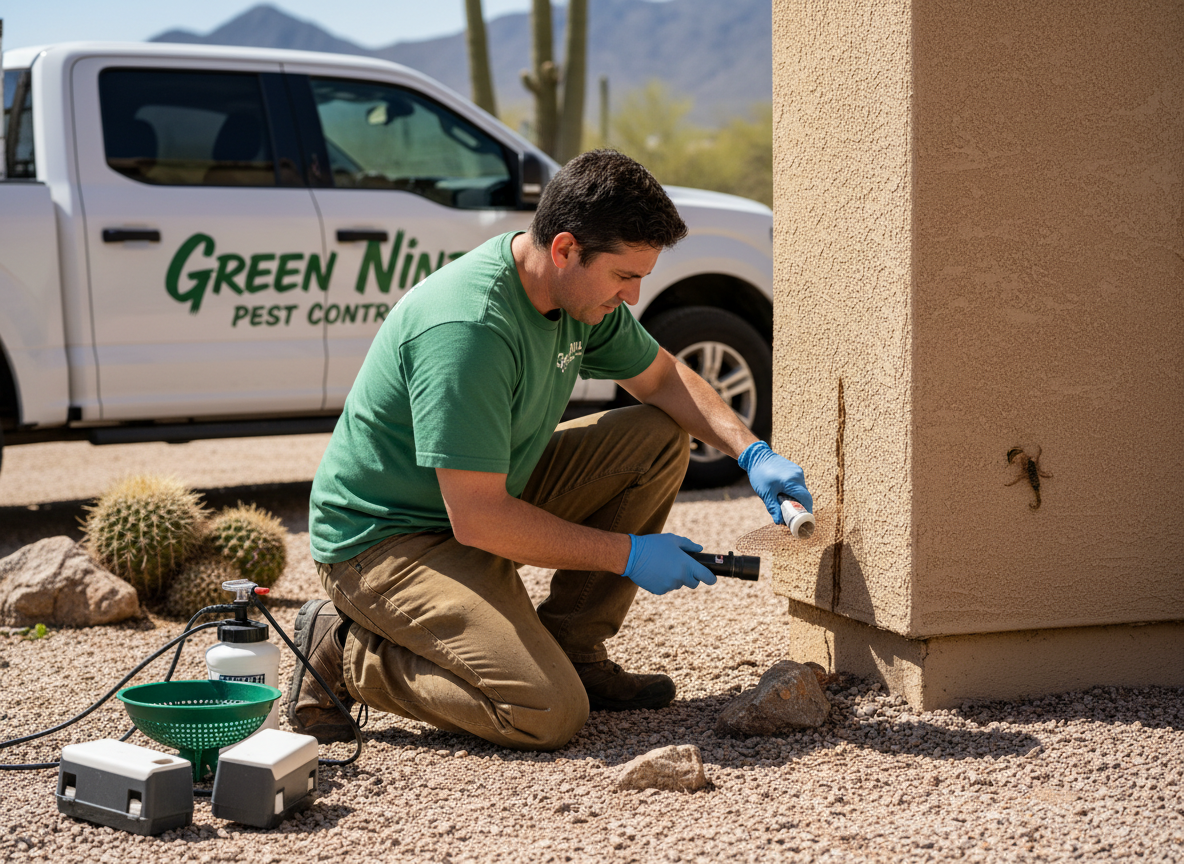
Mesa homes built before the 1990s in Downtown Mesa and along Red Mountain often contain untreated wood framing and stucco that allows drywood termites to enter through small cracks. The extreme summer heat drives colonies deeper into cooler wall voids and attic spaces, making surface-only checks unreliable. Inspectors must pull back baseboards, examine sill plates, and use moisture meters around plumbing penetrations where condensation forms even in arid conditions.
Superstition Springs and areas near the Superstition Mountains sit on sandy soil that subterranean termites travel through easily after monsoon moisture. Properties close to Riverview Park irrigation canals see higher activity because constant soil moisture supports mud tubes along foundations. A proper inspection maps these tubes, checks under HVAC platforms, and notes any cellulose debris left from construction that still attracts colonies years later.
Seasonal Patterns in Maricopa County
Termite activity peaks after monsoon rains when alates swarm at dusk. Homeowners in Tempe and Phoenix corridors often miss early signs because the desert climate keeps wood dry on the surface while hidden galleries expand. Inspections scheduled before real-estate closings should include both interior and exterior perimeter checks plus attic access to satisfy Maricopa County disclosure requirements.
Common Edge Cases
Slab-on-grade homes popular in the 1970s-80s around Mesa Arts Center hide termite entry points under carpet tack strips and door thresholds. Multi-story townhomes near Superstition Springs can have separate colonies on different floors, requiring separate treatment zones. Inspectors note any recent stucco repairs that may conceal previous damage or active tubes.
Technician insight
In Mesa the thing that catches most people out with Termite Inspection is how fast drywood colonies move once monsoon moisture hits the Superstition Springs soil. Older slab homes in Downtown Mesa often show no exterior signs because the termites stay inside the stucco and under tack strips, so skipping the attic check misses the real colony every time.
Red Mountain Home with Hidden Activity
A 1980s ranch near Red Mountain showed minor pellets near one window. Inspection revealed active drywood galleries running through ceiling joists connected to an old HVAC platform. We mapped the full extent, confirmed no subterranean tubes, and outlined localized treatment zones without opening walls.
Termite Inspection Services We Offer
✓Drywood Termite Inspection
Targets drywood colonies common in older Mesa framing by probing wood members and checking for fecal pellets in attics and wall voids.
✓Subterranean Termite Inspection
Focuses on mud tubes along foundations and soil moisture near irrigation lines in neighborhoods like Superstition Springs and Red Mountain.
✓Pre-Construction Termite Inspection
Evaluates new builds for soil treatment gaps and wood-to-soil contact before concrete is poured in Maricopa County developments.
✓Real Estate Termite Inspection
Provides documented findings for property transfers, including photos of damage and recommendations for buyers in Downtown Mesa and surrounding areas.
✓Post-Treatment Verification Inspection
Confirms treatment effectiveness by rechecking previously active sites around plumbing and expansion joints after initial service.
How it works
- 1
Exterior Perimeter Walk
Technician examines foundation, stucco joints, and any irrigation lines for mud tubes or wood debris.
- 2
Interior Access Points
Baseboards, door frames, and plumbing penetrations are checked with flashlight and probing tool.
- 3
Attic and Crawlspace Review
Insulation, rafters, and HVAC platforms are inspected for pellets, galleries, or moisture issues.
- 4
Findings Report
Written summary with photos and treatment options is provided same day from the 2652 E Hopi Ave base.
Pricing
Cost depends on square footage, age of home, and number of stories; call for an upfront quote.