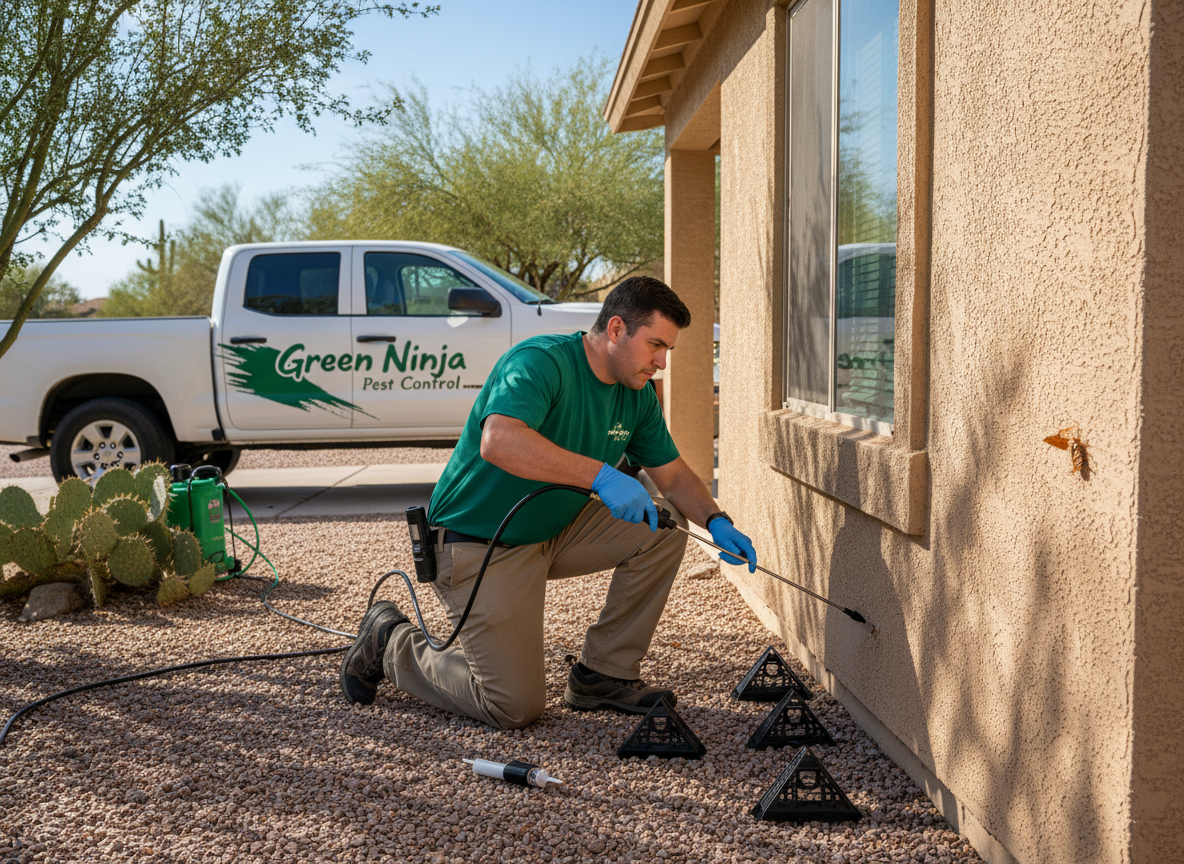
Mesa's hot desert climate pushes cockroaches indoors during summer when temperatures exceed 110 degrees, especially in older housing stock common in Downtown Mesa and near Riverview Park. German cockroaches thrive in kitchens and bathrooms where residents battle constant moisture from evaporative coolers, while larger American cockroaches enter from irrigation lines and drainage areas around Superstition Springs properties. Treatments rely on gel baits placed in voids and behind appliances rather than widespread spraying to avoid driving roaches deeper into wall cavities common in Maricopa County tract homes built before 1990.
Edge cases appear frequently in homes backing the Superstition Mountains where monsoon runoff creates temporary moisture pockets that sustain outdoor populations. Technicians must account for shared plumbing between neighboring units in denser Red Mountain neighborhoods and the rapid re-infestation risk when untreated properties sit just blocks away in Tempe or Phoenix. Bait rotation and follow-up visits spaced seven to ten days apart prevent resistance, a pattern observed across multiple seasons in Mesa's varied housing ages.
Code considerations include avoiding treatments near food prep surfaces and documenting all product placements for multi-unit buildings. Homeowners often overlook attic and crawlspace access points created by HVAC installations, allowing roaches to travel between floors undetected during the cooler shoulder seasons.
Technician insight
In Mesa the thing that catches most people out with Cockroach Control is underestimating how fast German cockroaches move between units in older Red Mountain duplexes when one neighbor leaves irrigation leaks untreated. The extreme summer heat drives them inside through any gap around plumbing penetrations, and skipping the second follow-up visit almost always lets the population rebound before monsoon season ends.
Red Mountain Duplex Re-infestation
A homeowner in Red Mountain reported roaches returning weeks after a single treatment. Inspection found active German cockroach harborage in shared wall voids connected to an untreated neighboring unit with a leaking evaporative cooler line. Gel baits were placed in both units plus perimeter monitoring, followed by a second visit ten days later. Activity dropped to zero and stayed that way through the remaining summer.
Cockroach Control Services We Offer
✓German Cockroach Treatment
Targets breeding populations inside kitchens and bathrooms using targeted gel baits and monitoring stations suited to Mesa's evaporative cooler moisture.
✓American Cockroach Extermination
Addresses larger roaches entering from irrigation and drainage around Superstition Springs and Red Mountain properties with perimeter and void treatments.
✓Multi-Unit Cockroach Control
Coordinates treatments across connected units common in Downtown Mesa to stop migration through shared plumbing and wall cavities.
✓Cockroach Prevention Sealing
Identifies and seals entry points around older Mesa homes near Riverview Park where heat and monsoons create repeated access routes.
✓Commercial Kitchen Cockroach Service
Focuses on food service locations in Mesa with strict sanitation protocols and scheduled inspections to meet health department expectations.
How it works
- 1
Inspection and Mapping
Technician examines all rooms, plumbing, and appliance areas to locate active harborage and travel paths specific to the property's age and location in Mesa.
- 2
Targeted Bait Placement
Gel and station baits are placed in voids, behind appliances, and along baseboards while avoiding food surfaces and pet areas.
- 3
Follow-Up Visits
Return trips at seven to ten day intervals monitor bait consumption and apply additional treatments until activity stops.
- 4
Prevention Recommendations
Homeowner receives guidance on sealing gaps and managing moisture sources that attract roaches during Mesa's extreme summer heat.
Pricing
Upfront quotes provided after inspection; cost varies by property size, infestation level, and number of follow-up visits required.