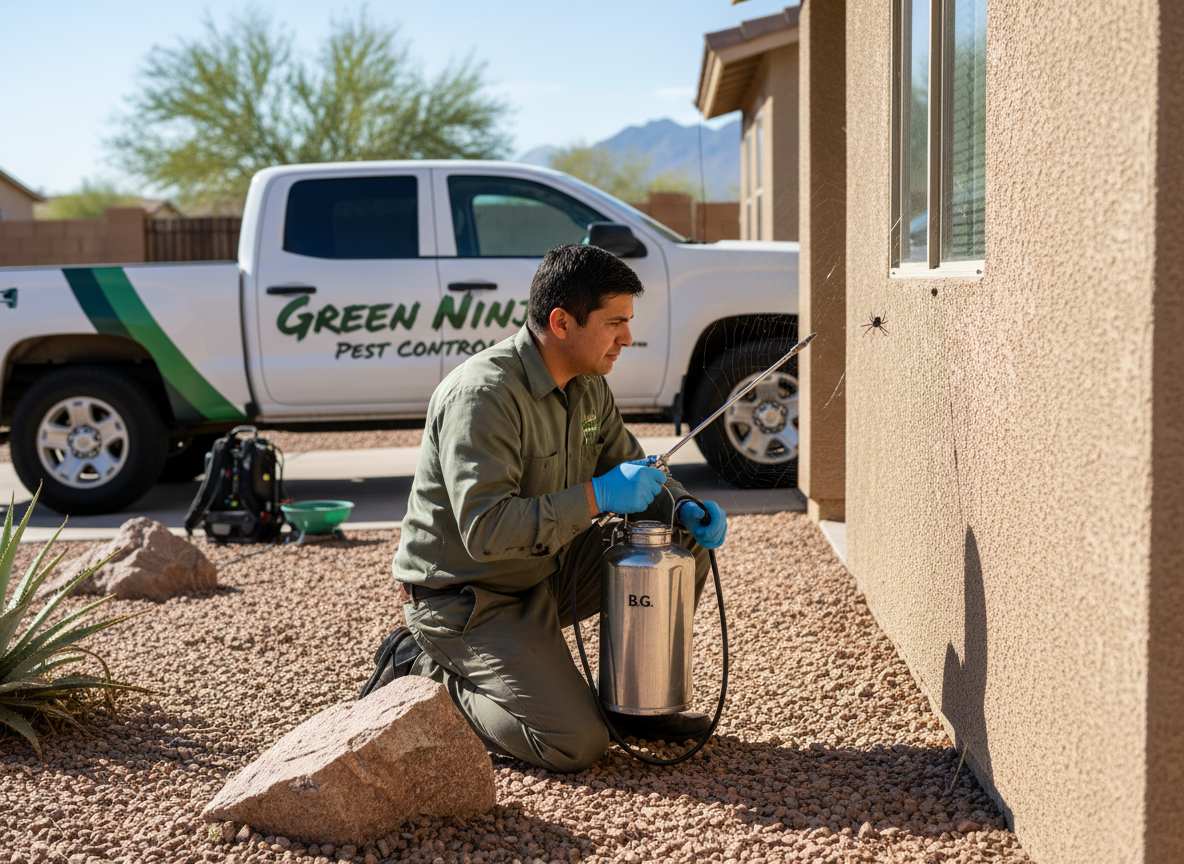
Spider control is a flashlight job. Black widows are found by their web, a messy, strong, irregular web low to the ground in a protected corner: weep holes, the underside of patio chairs and tables, the gap between the pool pump and the pad, irrigation valve boxes, block wall corners, the tracks of a sliding door, stacked pots and the corners of the garage. The technician walks the property at dusk or with a flashlight, knocks down every web with a web brush, identifies the spider, treats the harborage with a residual, and looks at what is feeding them. Crickets, roaches and flies around the pool light and patio light are the food supply, and the insect program is part of the spider program.
The black widow is the dangerous spider across all of Arizona, from Yuma to Flagstaff, and it is common in every subdivision with block walls and a pool. Arizona does not have a native brown recluse population. The local relative is the Arizona brown spider, found mostly in the desert and in woodpiles and sheds in Tucson, Marana, Oro Valley and desert edge Phoenix metro lots, and most calls that come in as recluse turn out to be a wolf spider, a funnel weaver or a sun spider. Wolf spiders and tarantulas come indoors in monsoon season and are harmless. Summer pool lights and patio lights draw the insects that draw the spiders. In the high country, Flagstaff and Prescott homes see black widows in crawl spaces, sheds and wood piles and more orb weavers around eaves in late summer.
Spider products are applied under an Arizona Department of Agriculture Pest Management Division license by the label. Spiders do not pick up residual through their feet the way crawling insects do, so the program depends on direct treatment of the harborage, treating the insects they eat, and physical web removal. A residual goes into weep holes, block wall corners, the pool pad, under patio furniture and along the garage perimeter, and dust goes only into voids and weep holes. Web removal is done on every visit because a web left in place is a spider coming back to it. Households with reptiles, birds and small children get product choices adjusted, and treated surfaces are off limits until dry.
The mistakes are about where people do not look. Patio furniture that sits on the deck all year is black widow housing, and turning a chair over before sitting is a habit worth having. The pool equipment pad gets skipped by a technician in a hurry and is the single most common widow harborage in a Valley backyard. Weep holes without screens hold widows and scorpions both. A garage with stacked boxes on the floor against the wall is a widow colony. Sliding door tracks and the corners of exterior door frames put widows at hand height. A bite from a black widow causes severe muscle cramping and abdominal pain within an hour or two and needs medical attention, especially for a child or an older adult, and Poison Control at 1-800-222-1222 is the first call.
Technician insight
Nearly every black widow call in a Valley backyard ends up at the pool equipment pad. The pump body is warm, the pad is shaded, crickets and roaches come for the drip, and the widow sits in the gap between the pump and the wall. A technician who does not pull the pool pump cover and treat behind it has not done the spider job.
Black Widows Under Every Patio Chair
A home with a pool where the homeowner found black widows under 3 patio chairs and one in the pool skimmer housing, with crickets active around the patio light every night. The technician swept and removed 14 webs and 6 egg sacs, treated the furniture undersides, the pool pad, the weep holes along the back wall and the garage corners, and put down cricket bait along the foundation and lawn edge. At the follow up 3 weeks later there were 2 new webs on the back wall and none at the furniture or the pool.
Spider Control Services We Offer
✓Black Widow Control
Web removal, harborage treatment and insect control for black widows in weep holes, pool pads, patio furniture, valve boxes and garages.
✓Web Removal Service
Physical removal of webs and egg sacs from eaves, patio covers, block wall corners, furniture and the pool area on every visit.
✓Arizona Brown Spider Treatment
Identification and harborage treatment for the local brown spider found in desert edge sheds, wood piles and garages, and correction of recluse misidentifications.
✓Pool Area and Patio Spider Treatment
Treatment of the pool equipment pad, deck edges, patio furniture undersides and light fixtures where spiders and their food collect.
✓Garage and Shed Spider Treatment
Perimeter and corner treatment inside garages and sheds, with storage recommendations to remove floor level harborage.
✓Recurring Spider Service
Scheduled web removal and harborage treatment through summer and monsoon season for properties where widows return every year.
How it works
- 1
Inspection and Web Sweep
The technician walks the property with a flashlight, knocks down every web and egg sac with a web brush, identifies the spiders, and finds the harborage and the insect food source.
- 2
Plan and Price
You are told what spiders are present, where they are living, whether any are dangerous, what the treatment covers, the dry time and the price.
- 3
Harborage and Insect Treatment
Residual into weep holes, block wall corners, pool pad, under furniture, valve boxes and garage perimeter, plus the cricket and roach treatment that removes the food supply.
- 4
Follow Up
A return visit re sweeps webs and checks the harborage points, and recurring service is set up for properties with steady pressure.
Pricing
The price moves with the size of the property, how much web removal is involved, whether there is a pool and a lot of patio furniture, and whether it is a one time treatment or recurring service. A small patio home and a half acre lot with a pool, a shed and a three car garage are different jobs. The number is set after the inspection.