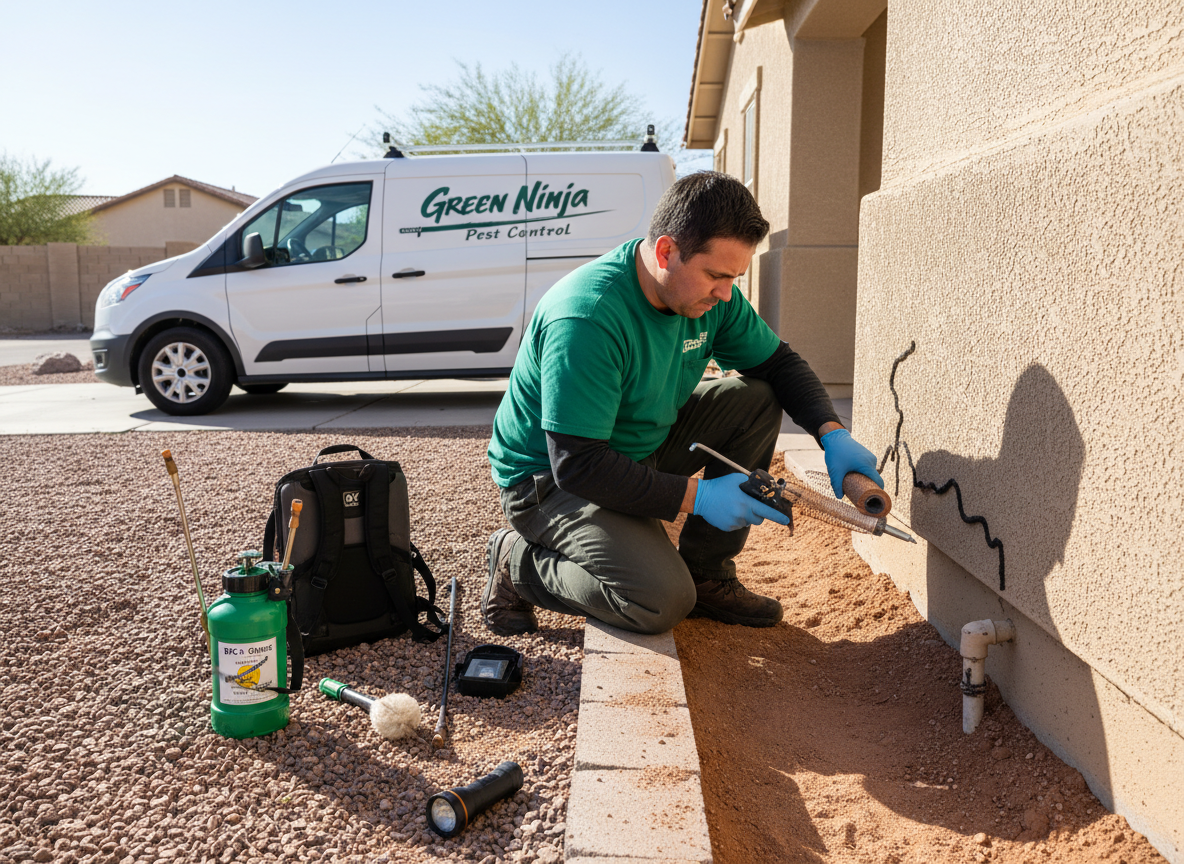
Flagstaff sits at 7,000 feet in Coconino County in the largest ponderosa pine forest in the country, and pest control there has almost nothing in common with the Phoenix metro. There is no meaningful bark scorpion activity at this elevation. The work is rodents first: deer mice, which carry hantavirus, moving into cabins, garages, sheds and crawl spaces every fall as nights drop below freezing, plus pack rats in the pinyon and juniper on the edges of town and roof rats in a few of the older neighborhoods. Winters bring snow, and a mouse that got in through the garage in October is in the pantry by January.
The housing is older and wood framed more than anywhere else on this list. Downtown, Southside, the historic Townsite and the neighborhoods near Northern Arizona University are 1890s to 1950s wood sided and brick homes with crawl spaces, stone foundations and old attics, and that means carpenter ants tunneling in damp wood, drywood termites in old framing, wasps under eaves, spiders in crawl spaces and cluster flies in the fall. Bark beetles kill stressed ponderosa on wooded lots in Country Club, Continental and along Lake Mary Road. University rentals and the hotel corridor along Route 66 and Milton bring German cockroach and bed bug work.
Flagstaff has a short, wet monsoon and a long cold winter, so the calendar runs fall rodent season, spring carpenter ant and wasp season, and summer spiders and flies, with quarterly service common. Restaurants downtown and along Route 66 run under Coconino County Health and Human Services inspection rules.
Around Flagstaff
We regularly work near:
- 📍Lowell Observatory
- 📍Northern Arizona University
- 📍Historic Downtown Flagstaff and Route 66
- 📍Arizona Snowbowl and the San Francisco Peaks
- 📍Walnut Canyon National Monument
- 📍Buffalo Park
Pest Control in Flagstaff — Local Notes
- •Deer mice move into cabins, garages and crawl spaces each fall, and hantavirus precautions apply to every cleanup: disinfectant before removal, gloves and respirator, no dry sweeping or vacuuming.
- •Historic wood framed homes in Downtown, Southside and the Townsite need crawl space and foundation exclusion for mice and carpenter ant nest location in damp framing, decks and window frames.
- •Drywood termites, not subterranean, are the common termite in older Flagstaff framing, and treatment targets the galleries directly rather than trenching the soil.
- •Bark scorpions do not live at 7,000 feet, so scorpion programs are not sold in Flagstaff; the summer insect work is spiders, wasps, flies and ants.