2026-09-03 ·
Subterranean Termites in Arizona: How to Spot Mud Tubes Before They Reach Your Drywall
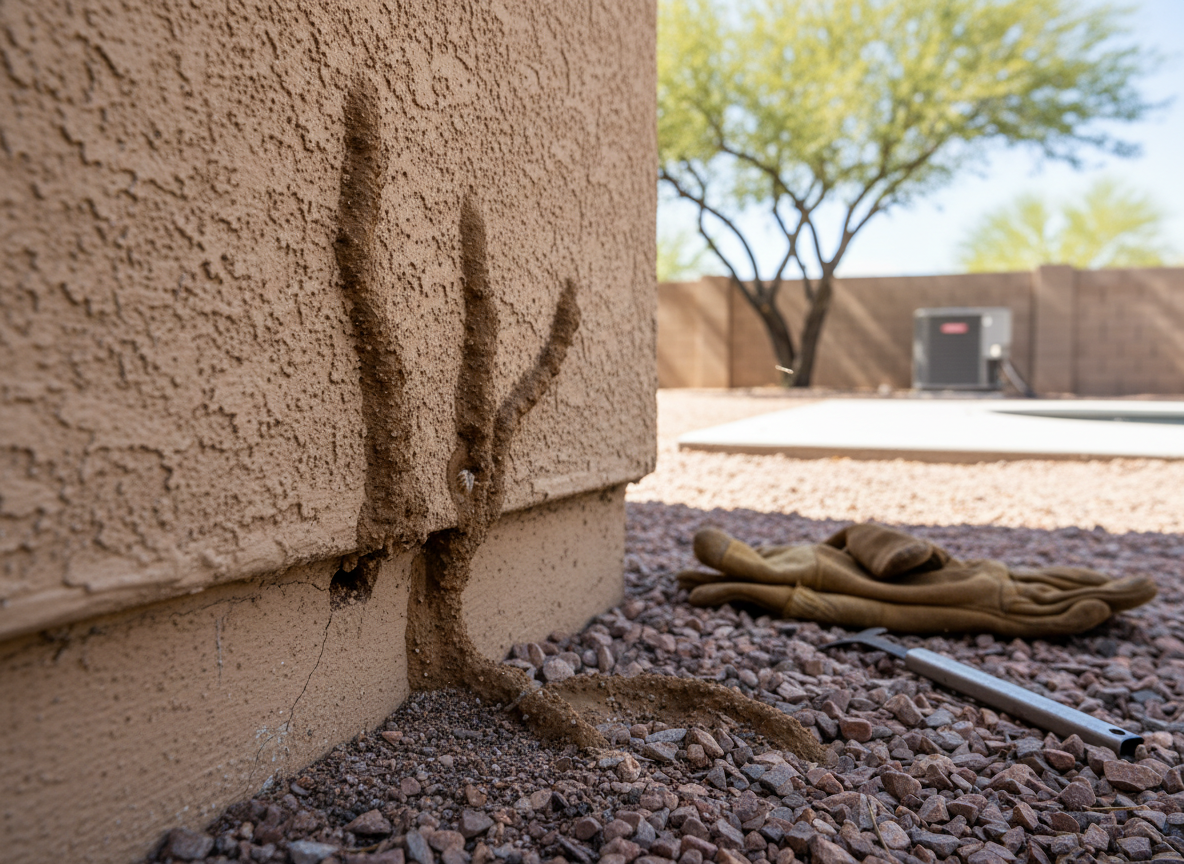
Subterranean termites in Mesa create mud tubes as pencil-thin earthen tunnels along foundation walls and piers, often within 2–4 weeks after soil moisture increases from irrigation or summer storms. These tubes shield the insects from extreme summer heat above 110°F while they travel from soil to wood sources. Homeowners in Maricopa County commonly find them first on stucco exteriors or near irrigation lines in older housing stock built before 1990.
Mud Tube Formation in Mesa's Desert Soil
Mesa sits on sandy loam soils common across Maricopa County that retain just enough moisture near foundations to support termite colonies. In areas like Superstition Springs and Red Mountain, drip irrigation around citrus trees and lawns creates consistent damp zones that subterranean termites exploit. The hot desert climate forces colonies to construct tubes quickly once monsoon rains arrive, because surface temperatures kill exposed workers. Tubes appear as 1/4-inch wide ridges of soil and saliva, usually starting at ground level and running vertically or horizontally toward sill plates. In Downtown Mesa homes with original slab construction, tubes often follow expansion joints where moisture collects. Checking after any irrigation cycle or storm reveals fresh tubes before they reach framing or drywall.
Where to Inspect Foundations in Mesa Neighborhoods
Begin at the exterior perimeter on the north and east sides of the home, where shade and irrigation keep soil damp longer. Look along the base of stucco in Red Mountain and near Riverview Park properties where older concrete slabs meet soil. Inside the garage, examine the seam between the slab and stem wall, as well as around plumbing penetrations. Superstition Mountains runoff can increase moisture on east-facing lots in Superstition Springs, so inspect those foundations twice during monsoon season. Use a flashlight at dusk when tubes are easier to distinguish from regular dirt. Any tube wider than a pencil or showing fresh repair work after you scrape it indicates active foraging.
Distinguishing Active Tubes from Abandoned Ones
Scrape a small section of the tube with a putty knife and check the next morning. Active tubes show new construction within 24 hours because the colony needs constant moisture exchange. Abandoned tubes crumble easily and lack the smooth interior lining. In Mesa's extreme heat, abandoned tubes dry out and crack within days, while fresh ones remain pliable. Document the location with photos and note proximity to wood mulch or fence posts, which serve as common bridges from soil. This simple test helps decide whether a professional termite inspection is needed before tubes reach interior framing.
Protecting Drywall and Framing in Mesa Homes
Once tubes reach the sill plate, termites can enter wall cavities within days, especially in single-story ranch homes common in Downtown Mesa. Focus exclusion efforts on sealing gaps around utility entries and maintaining 6-inch clearance between soil and stucco. Properties near Tempe and Phoenix often share the same soil conditions, so consistent perimeter checks apply across the region. Termite treatment becomes necessary when multiple active tubes appear, and state rules require filing a TARF form for any soil application. For deeper understanding of Arizona reporting requirements, see What a TARF Is and Why Every Arizona Termite Treatment Gets Filed With the State. Regular monitoring during the hottest months prevents hidden damage to drywall and baseboards.
Timing Checks Around Monsoon and Irrigation Cycles
Mesa receives most of its annual moisture between July and September, so increase foundation walks to every 10–14 days during this window. Irrigation timers set for early morning create overnight humidity that termites use to extend tubes. After any 0.5-inch rain event, walk the perimeter the following evening. Homes near the Superstition Mountains may see additional moisture from sheet flow, requiring extra attention on the east side. Keeping records of tube locations helps track colony movement over multiple seasons and informs targeted follow-up. Does Pest Control Still Work in Monsoon Season: What Rain Does to a Barrier Treatment explains how heavy rain affects existing treatments in the same climate.