2026-09-03 ·
Arizona Bark Scorpions: Why Block Walls and Citrus Yards Make Them Worse
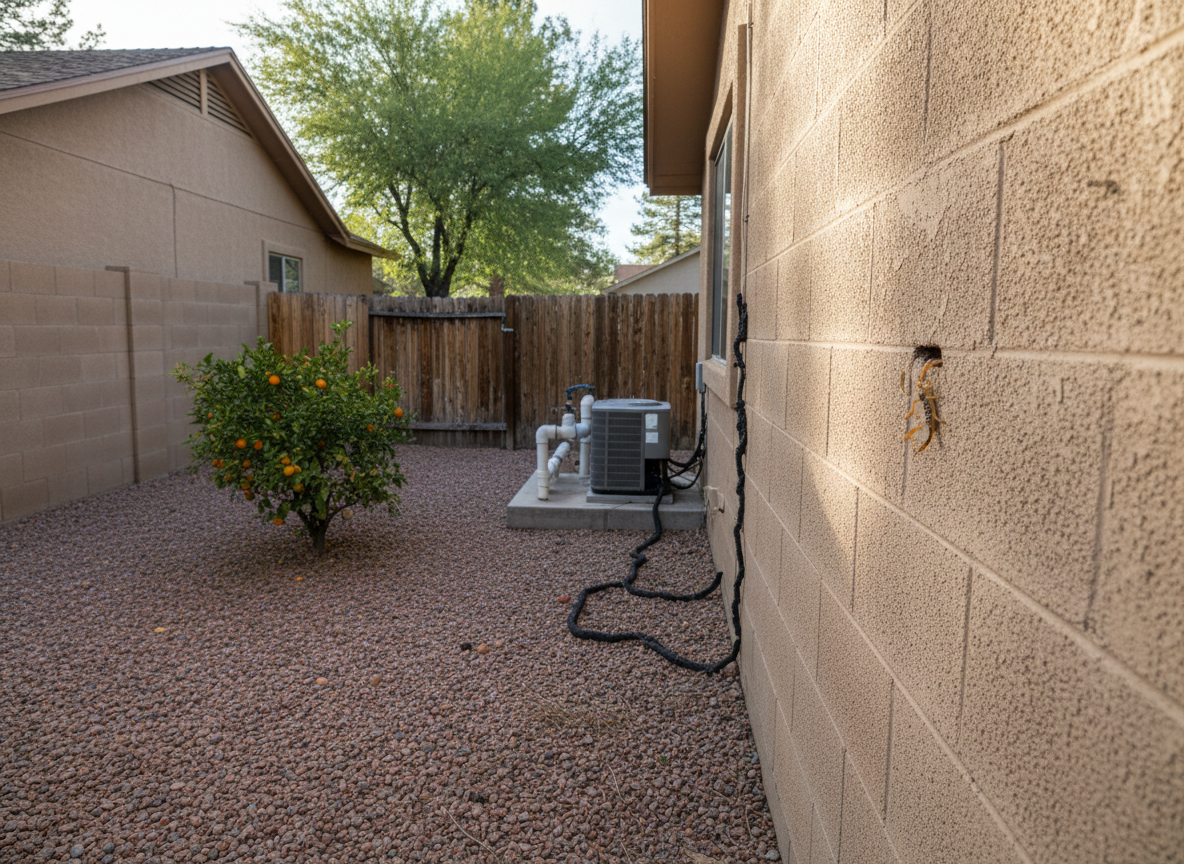
Arizona bark scorpions increase around Mesa homes when block walls and citrus yards are present because these features supply daytime shelter from 110-degree summer heat and steady insect prey in Maricopa County yards.
Block Walls as Daytime Shelter in Mesa
Mesa homes built with concrete block perimeter walls, common from Downtown Mesa to Red Mountain, create narrow gaps and shaded crevices that match the 2- to 3-inch body size of Arizona bark scorpions. These scorpions rest in wall voids during daylight hours when surface temperatures exceed 100 degrees, then emerge at night to hunt. The same walls trap moisture from irrigation lines, extending scorpion activity into the dry months when natural desert ground cracks open. Homes near Riverview Park often show higher scorpion counts along shared block fences because the continuous barrier lets scorpions travel between properties without crossing open ground. Sealing these gaps requires targeted foam and weatherstripping rather than broad sprays that miss the voids.
Citrus Trees Supply Prey and Moisture
Citrus trees planted in many Superstition Springs and east Mesa yards drop fruit and attract crickets, roaches, and other insects that form the main diet of Arizona bark scorpions. The leaf litter and shallow root moisture create micro-habitats where scorpions can find both food and humidity during the extreme dry periods typical of the Sonoran Desert. Trees placed within 10 feet of block walls compound the problem by shading the wall base and dropping debris directly into the gaps scorpions use. Residents in Tempe and Phoenix border areas report similar patterns when they maintain mature citrus groves without regular cleanup. Removing fallen fruit weekly and trimming lower branches reduces the insect population that draws scorpions to the yard.
Desert Climate and Seasonal Patterns
Mesa's hot desert climate concentrates scorpion movement from April through October when nighttime temperatures stay above 70 degrees. Monsoon rains temporarily increase surface activity, yet the heat returns quickly and drives scorpions back to block wall refuges. Properties near the Superstition Mountains experience additional pressure because natural rock outcrops connect with residential walls, allowing scorpions to move from wild terrain into yards. Barrier treatments lose effectiveness faster on irrigated citrus soil because water dilutes the product within weeks. Consistent monitoring around wall bases and tree trunks is required rather than single seasonal applications.
Practical Steps for Mesa Homeowners
Start by inspecting the base of every block wall for gaps wider than a pencil and the soil line under citrus trees for leaf accumulation. Use a UV flashlight at night to locate active scorpions along these features before any treatment. Home sealing and pest exclusion work reduces entry points when applied to wall caps and expansion joints. For ongoing pressure in Red Mountain or Superstition Springs neighborhoods, pair exclusion with targeted dust applications in the voids that sprays cannot reach. Scorpion control programs that focus on these exact harborage sites produce longer results than perimeter sprays alone. Home sealing and pest exclusion also limits future movement when monsoon moisture pushes scorpions toward structures. Review how rain affects barrier treatments in the related post on monsoon season performance for timing decisions.