2026-09-03 ·
Crickets Are the Reason You Have Scorpions: How the Food Chain Works on a Desert Property
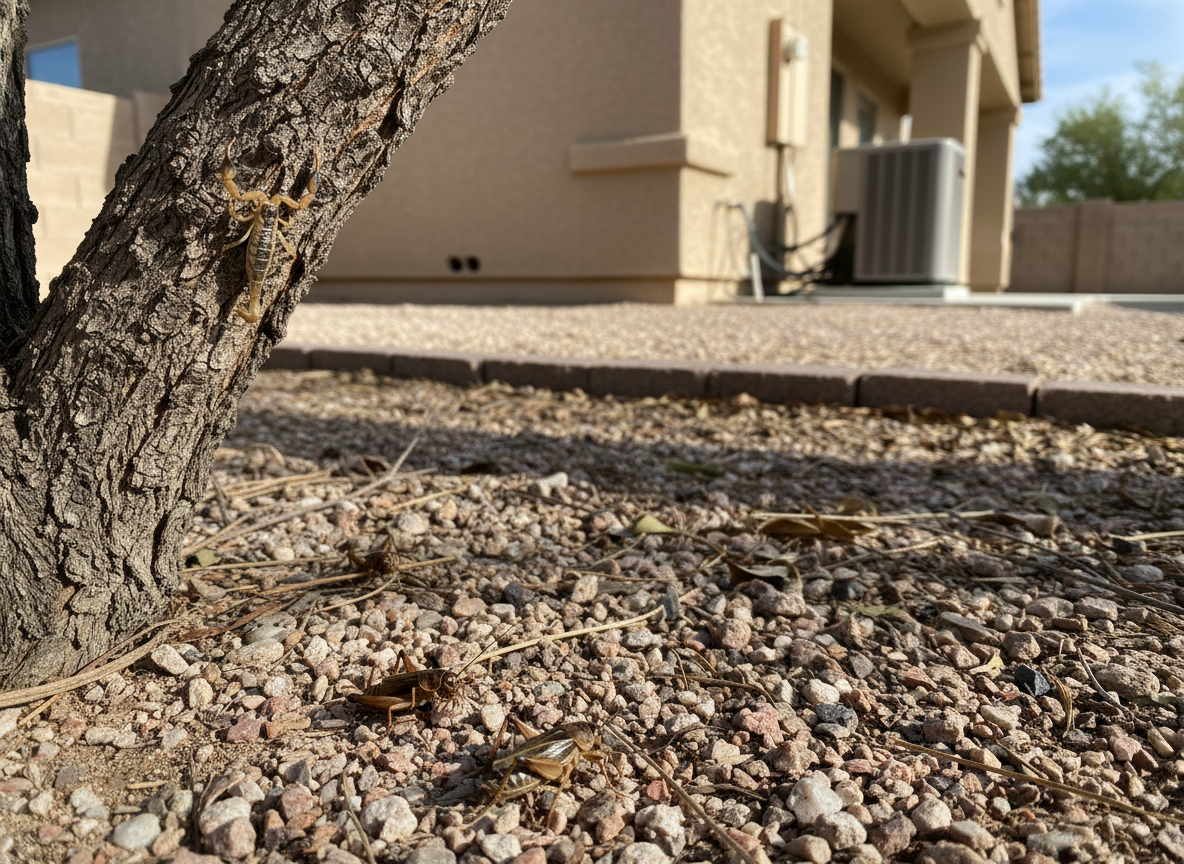
Crickets are the reason a desert property keeps its scorpions. Bark scorpions eat insects, field crickets are the most abundant insect on an irrigated Arizona lot, and a yard that feeds crickets all summer is a yard that scorpions will not leave no matter how many times the foundation is sprayed. Control the crickets and the scorpions thin out on their own.
The Food Chain on a Desert Lot
A subdivision yard in the low desert is a small ecosystem. Water goes in through drip lines, sprinklers, the pool and the citrus basin. That water grows grass, weeds, leaf litter and algae, and it keeps the soil under the block wall and the pavers damp. Field crickets lay eggs in that damp soil in spring, the nymphs hatch by early summer, and by July a watered yard can carry hundreds of crickets that chirp from the block wall, the garage and the pool pad every night.
Crickets are the base of the chain. Above them sit the predators: black widows, which web along the wall and the pool pad where crickets pass, wolf spiders, centipedes, and the Arizona bark scorpion, which hunts crickets along the same block wall at night. A bark scorpion can go weeks without a meal, but it does not stay where there is nothing to eat. A yard that keeps a large cricket population through summer is a yard with a resident scorpion population and a black widow population sitting on top of it.
Why Spraying for Scorpions Alone Does Not Hold
Homeowners and some companies treat the symptom. They spray the foundation for scorpions, see fewer for 2 weeks, and then the scorpions are back. Three things go wrong. The residual breaks down fast in 110 degree heat and monsoon rain. The scorpions were never on the foundation, they were in the block wall cells and the weep holes. And the crickets, which were untouched, keep chirping from the wall and calling the next scorpion in from the neighbor's yard.
Scorpions have a thick, waxy exoskeleton and are resistant to a lot of general purpose sprays. They also do not groom like a roach and do not pick up much product walking across a treated surface. The most reliable way to get product into a bark scorpion is through what it eats, which is another reason the cricket program is the scorpion program.
Where the Crickets Are Coming From
On most lots the crickets breed in a few predictable places, and finding them is the first step.
- Overseeded winter grass and summer bermuda, especially the edge where the lawn meets the block wall or the house, where the soil stays wet after every watering.
- The citrus basin and the mulch or leaf litter under any watered tree or shrub.
- Irrigation valve boxes and the water meter box, which are damp, dark and full of crickets year round.
- The pool equipment pad, where the pump drips and the concrete stays cool.
- Under pavers, flagstone and landscape rock that sits on damp soil.
- The garage, where crickets come in under the door seal and breed in stored cardboard and behind the water heater.
- The neighbor's yard, since a shared block wall is a highway.
Walk the property after dark and listen. Then look with a flashlight at the base of the wall, in the valve boxes and around the pool pad. Where the crickets are is where the scorpions and widows will be.
Breaking the Chain
A program that actually breaks the food chain does four things in order.
- Bait the crickets. A granular insect bait spread along the foundation, the grass edge, under the citrus, around the pool pad and into the valve boxes is picked up by crickets and roaches and kills the population at its source. It works in places a spray cannot reach and it keeps working between visits.
- Put a residual where the crickets travel. The base of the block wall, the weep holes, the pool pad and the garage perimeter get a residual so crickets and the scorpions that follow them are both exposed.
- Reduce the breeding ground. Move drip emitters and sprinkler heads away from the wall and the foundation so the soil there dries, pick up fallen fruit, thin leaf litter, and get cardboard off the garage floor.
- Treat the scorpions directly in the wall cells, weep holes and cap, then screen the weep holes and seal the house.
Timing matters. Cricket eggs hatch in late spring, so the first round of bait goes down in March or April before the population builds, and it is repeated monthly through monsoon season because rain washes it in and a new generation hatches with every storm.
When It Becomes a Safety Issue
A cricket problem is a nuisance. The scorpions and black widows it supports are not. Bark scorpion stings on children, elderly people and pets cause real harm, and a black widow bite causes hours of severe muscle cramping. A yard with crickets chirping from every wall in June is a yard where those encounters are more likely by August. That is the point of treating the bottom of the chain: fewer crickets means fewer predators and fewer stings and bites.
FAQ
Are the crickets in my yard the same ones scorpions eat? Yes. Field crickets, the dark brown crickets that chirp from the block wall at night, are the main prey for bark scorpions on a residential lot.
Will the scorpions leave if the crickets are gone? Most of them will disperse or starve, and the ones that remain are easier to reach with a wall treatment. The count drops sharply within a few weeks of a real cricket program.
Why do I get crickets in the garage? The garage door seal is worn or lifted, the garage is cool and dark, and there is cardboard and clutter on the floor. Bait along the garage perimeter, a new door seal and boxes on shelves fix it.
If the block wall chirps all night, the scorpions are already there. A scorpion control program from Green Ninja Pest Control treats the crickets and the scorpions together so the chain breaks at the bottom.