2026-09-03 ·
Sewer Roaches Coming Up the Drain: Why American Cockroaches Show Up After Monsoon Rain
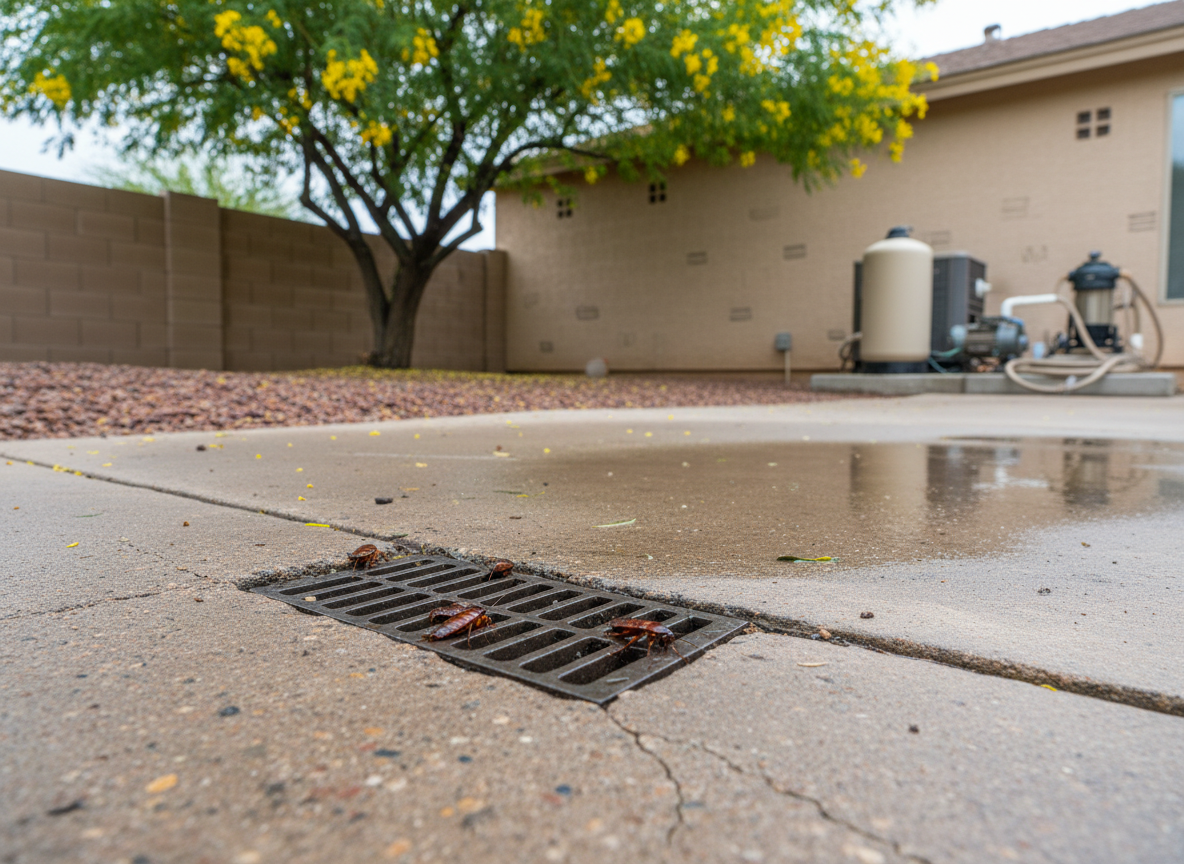
American cockroaches appear in Mesa drains within 24 to 48 hours after the first major monsoon rain because floodwater fills sewer lines and forces the insects upward through plumbing traps.
Monsoon Flooding and Local Sewer Systems
Mesa sits in Maricopa County where summer monsoon storms drop 1 to 2 inches of rain in under an hour on already hard-packed desert soil. Water cannot soak in quickly, so it rushes into storm drains and combined sewer lines that run beneath neighborhoods such as Downtown Mesa and Red Mountain. Older homes built before 1980 often have cast-iron or clay pipes with loose joints; pressure from rising water pushes American cockroaches out of those lines and past dry P-traps in basements and laundry rooms. Properties near Riverview Park and Superstition Springs sit on flatter grades where drainage backs up faster than on the slopes closer to the Superstition Mountains.
How American Cockroaches Travel Through Drains
American cockroaches measure 1.5 to 2 inches long and prefer moist, dark voids. When monsoon water fills the main sewer, the insects move into smaller lateral lines that connect to individual homes. In Mesa, many residences have floor drains in garages or utility rooms that tie directly into the sewer; once the trap dries or the water pressure exceeds the trap seal, roaches climb the pipe wall and emerge. The extreme summer heat of 105 to 115 degrees keeps the insects active at night, so sightings often happen between 10 p.m. and 4 a.m. after an evening storm.
Common Entry Points in Mesa Housing Stock
Homes in Downtown Mesa frequently have original plumbing from the 1950s and 1960s that lacks modern backflow preventers. Slab-on-grade construction common in Red Mountain subdivisions leaves little crawl space, so any breach in the sewer line under the slab sends roaches straight into the living area. Superstition Springs properties built on fill dirt sometimes have settling that cracks pipe joints, creating additional routes. Residents notice the insects first around kitchen sinks and bathroom floor drains because those fixtures sit closest to the main sewer connection.
Practical Steps After the First Monsoon Storm
Pour 1 gallon of water down every floor drain and unused sink the morning after a storm to refill traps. Run a 2-inch layer of mineral oil in seldom-used drains to slow evaporation during the remaining monsoon season. Check exterior cleanouts near the street for standing water; persistent pooling indicates a main-line blockage that needs professional clearing. Seal gaps around pipe penetrations in utility rooms with expanding foam rated for plumbing use.
Residents who continue to see multiple roaches per night after trap maintenance should review the full cockroach control options available for Mesa homes.
When Local Conditions Require Further Action
If sightings persist beyond 72 hours after the storm or if roaches appear in multiple rooms, the issue often traces to a cracked lateral line or a clogged main serving several homes on the block. In Maricopa County, heavy clay soils around Apache Junction and eastern Mesa expand and contract with moisture, stressing older sewer lines more than sandy soils near Tempe. A targeted inspection of the cleanout and camera scope of the line reveals whether the problem stays inside one property or involves the shared main.