2026-09-03 ·
Roof Rats in Citrus Neighborhoods: How They Get Into Attics and How to Keep Them Out
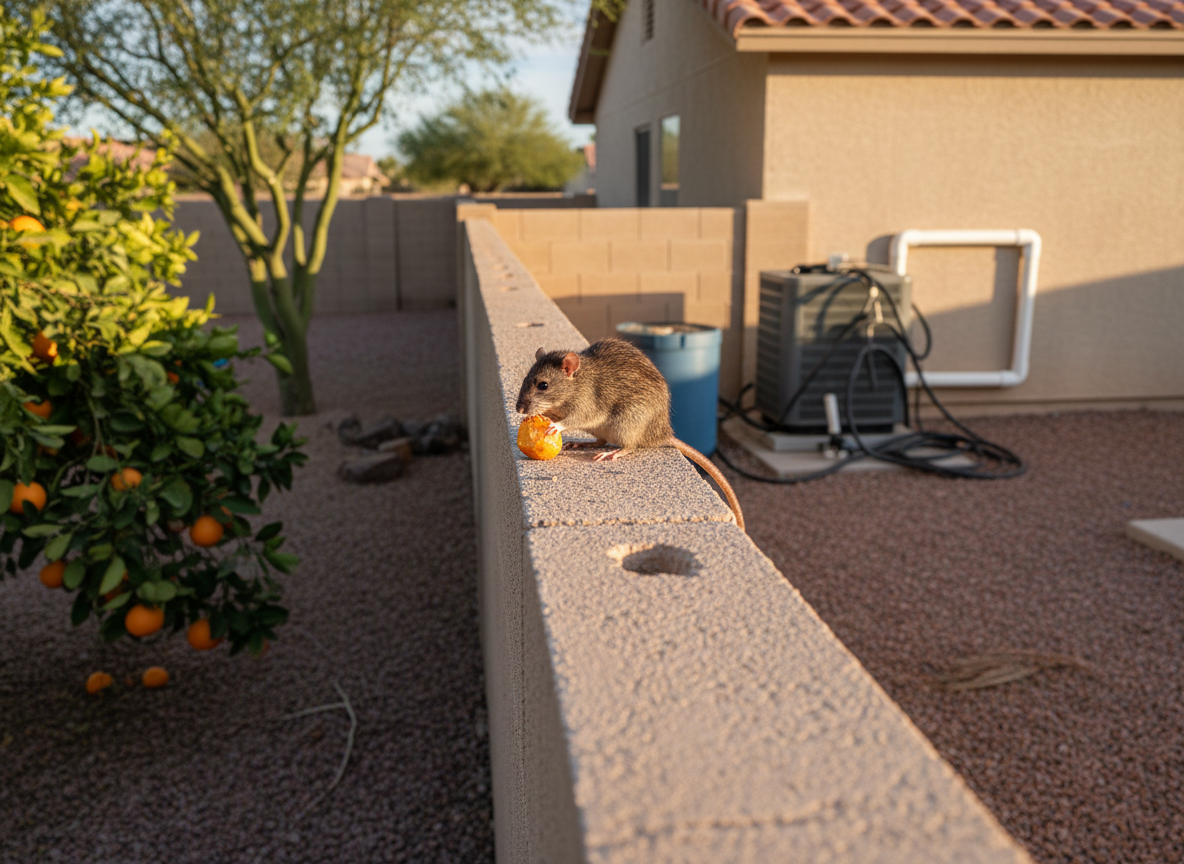
Roof rats reach attics in Mesa citrus neighborhoods through gaps as small as ½ inch around roof vents, utility penetrations, and fascia boards, drawn by fallen fruit and the need for shade during extreme summer heat in Maricopa County.
Entry Points Common in Citrus Neighborhoods
Roof rats travel along power lines and tree branches into homes built in areas like Superstition Springs and Red Mountain where older citrus groves still stand. These rodents chew through soft materials such as dryer vents and soffit corners that expand and contract in daily temperature swings reaching 110 degrees. In Downtown Mesa properties near the Mesa Arts Center, stucco cracks from soil movement create additional routes along irrigation lines that supply constant moisture. Once inside, rats follow rafters to nest in insulation near attic fans that pull in outdoor scents from nearby groves. Checking these points at dusk when activity peaks reveals the travel routes before damage spreads to wiring or stored items.
How Desert Heat and Citrus Trees Increase Pressure
Mesa’s hot desert climate forces roof rats to seek water and stable temperatures above 80 degrees once daytime highs exceed 105 degrees for weeks at a time. Citrus fruit provides both food and hydration, so trees planted close to eaves in Superstition Springs and Red Mountain neighborhoods become launch points onto roofs. Homes near Riverview Park see higher pressure because irrigation runoff keeps soil moist and supports year-round plant growth that supports larger rat populations. The same heat that drives rats indoors also warps roof flashing, widening existing gaps over time. Monitoring fruit drop patterns and trimming branches at least 6 feet from the structure reduces the number of nightly crossings from tree to attic.
Exclusion Steps That Hold Up in Mesa Conditions
Start by sealing every opening ½ inch or larger with ¼-inch hardware cloth and exterior-grade caulk rated for 180-degree surface temperatures. Install metal vent covers on all roof and gable openings, then add ½-inch mesh over chimney flues where rats commonly drop in. Trim citrus and palm fronds so no branch touches the roofline, and move irrigation emitters at least 3 feet from the foundation to eliminate easy water sources. In neighborhoods like Superstition Springs, adding door sweeps and weatherstripping around attic access panels stops ground-level entry that later leads upward. These steps close the routes that open wider each summer when expansion joints shift.
Ongoing Monitoring After Initial Sealing
Place snap traps or enclosed bait stations along established runways in the attic for 30 days after sealing to confirm no rats remain inside. Check exterior seals every 90 days because monsoon winds and extreme heat can loosen caulk around vents. Homeowners in Red Mountain and near the Superstition Mountains often combine these checks with quarterly inspections of citrus tree canopies for new gnaw marks. When activity persists, targeted rodent control addresses the remaining population while home sealing and pest exclusion reinforces the structure against re-entry. Consistent records of trap locations and seal condition help track seasonal patterns tied to fruit harvest cycles.