2026-09-03 ·
Pet Conscious Pest Control: What Dry Time Means and Why Some Homes Skip the Dust
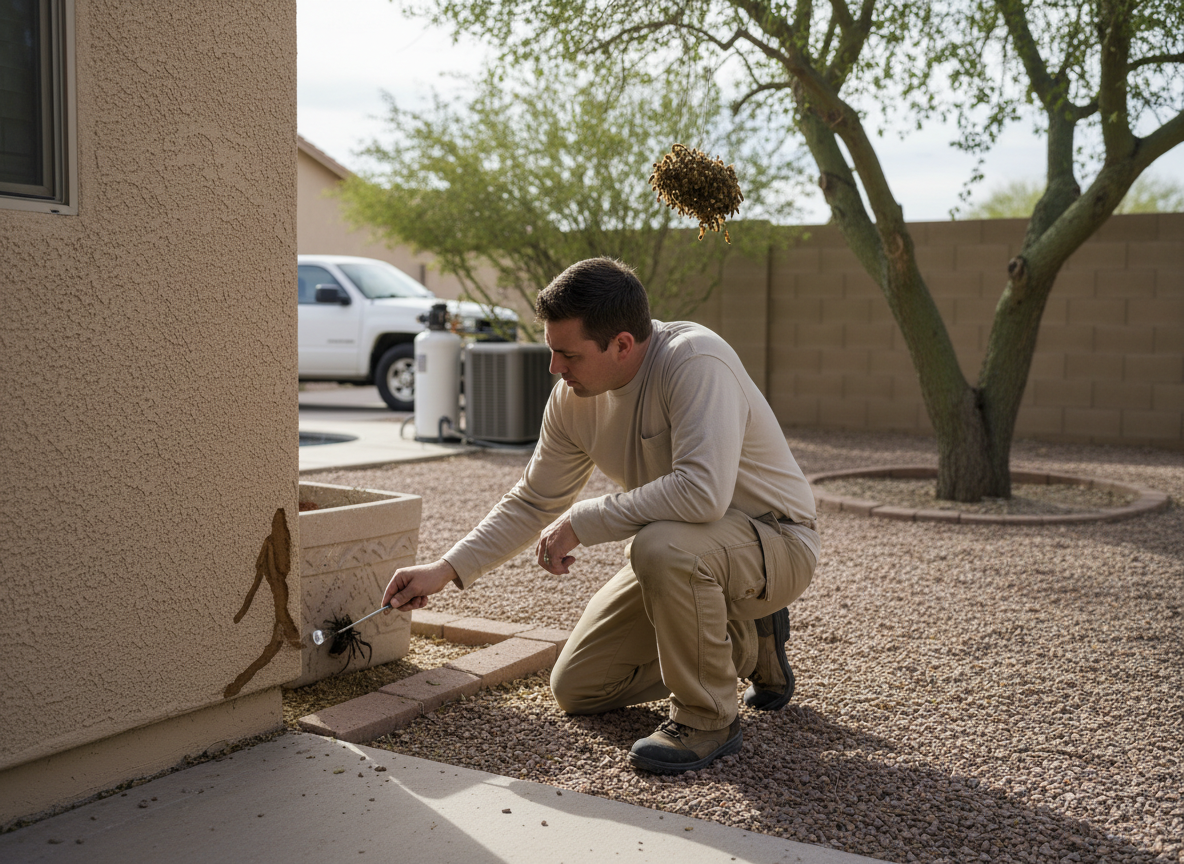
Dry time is the period after a liquid pest control application when the product is still wet on the surface and can transfer to a paw, a hand or a tongue; once it has dried, usually 1 to 3 hours in Arizona heat, the residue is bonded to the surface and people and pets can use the area again. Homes with pets and small children skip broadcast dust in living spaces because dust stays loose, drifts, and ends up on fur, floors and hands in a way a dried liquid does not.
What Pet Conscious Actually Means
It does not mean harmless. No pesticide is harmless, and any company that calls a product non toxic or completely safe is overstating it. What it means is that the technician chooses products, formulations and placements for the household in front of them, follows the label, and tells the family exactly what to stay off and for how long. A house with a dog, a house with a cat, a house with a bearded dragon or a bird, and a house with a crawling baby each get a different plan, and a technician who does not ask about the animals before opening the truck is not doing this.
How Dry Time Works
Most residual insecticides are applied as a liquid: a concentrate mixed with water and sprayed as a fine band along the foundation, the baseboard, the weep holes or the garage perimeter. While wet, the product can be picked up by contact. As the water evaporates the active ingredient bonds to the surface as a thin residue, which is what keeps working against insects that walk across it for weeks. Once dry it does not transfer to a paw or a hand in any meaningful amount, which is why the label instruction is to keep people and pets off treated surfaces until dry, not forever.
In Arizona that is fast outdoors: 30 minutes to an hour on a hot wall, longer on a shaded patio or a cool morning. Indoors, along baseboards and under sinks, plan on 1 to 3 hours with the AC running. The technician should give a specific number for the day and the surfaces treated, not a vague reassurance.
Why Some Homes Skip the Dust
Insecticide dust, a fine powder such as a silica or diatomaceous earth product or a pyrethroid dust, is a useful tool in the right place. Puffed into a weep hole, a wall void, the back of an electrical outlet or the gap under a bathtub, it stays dry and keeps working for months where liquids cannot go. That is where Green Ninja Pest Control uses it. Broadcast dusting of a room, a garage floor, the top of a baseboard or a patio, the white powder some companies leave everywhere, is a different thing.
Loose dust in a living space drifts with the AC, settles on floors and furniture, sticks to a dog's coat and is groomed off by a cat, and gets on a toddler's hands. Reptiles and birds are especially sensitive to airborne particles. So in homes with pets and small children, dust goes only into sealed voids, and the visible surfaces get a liquid that dries and bonds, or a bait in a station that nothing but the target insect can reach.
What Changes for Each Kind of Household
- Dogs. Dogs lick floors and dig at treated soil. Granular baits go in areas the dog does not use or in bait stations, liquids dry before the dog goes out, and rodent bait is only ever in a locked tamper resistant station.
- Cats. Cats groom, so anything on their fur ends up in them. No dust on surfaces they walk, and liquids fully dry before they are back in the room.
- Reptiles, amphibians and birds. These are the most sensitive animals in a house. Tanks and cages are covered or moved to an untreated room, ventilation is kept up, and some products are avoided entirely.
- Fish ponds and aquariums. Covered before any nearby treatment, and no spraying upwind of a pond.
- Babies and toddlers. Nothing on surfaces they crawl or mouth. Crack and crevice placement only, baits in stations, and a longer dry time before the room is used.
- Chickens, rabbits and backyard livestock. Coops and runs are excluded from treatment and the products near them are chosen for that.
What to Ask Your Technician
What product is going down today and where. How long each surface needs to dry. Whether anything is being dusted, and if so, where and whether it is sealed. Where any bait station is placed and whether it is locked. Whether the plan changes because of your specific animal. A technician who answers those plainly and adjusts is doing pet conscious work. One who says it is all safe and moves on is not.
The reason this matters is that the pests being treated are themselves the danger. Bark scorpion stings on dogs and cats are common in Arizona, and a small dog stung on the face can need a vet. Black widow bites, fire ant stings and roof rat fleas all reach pets. The goal is to remove those risks with product choices and placements that do not add a new one.
FAQ
Can my dog go in the yard right after treatment? Not until the technician says it is dry, usually within an hour outdoors in warm weather. After that, yes.
Do I need to leave the house during treatment? For a routine crack and crevice treatment, no. Staying out of the treated rooms until dry is enough. Reptiles and birds are moved or covered.
Is the white powder other companies used dangerous? Loose dust on open surfaces is a transfer risk to pets and kids, which is why it is kept inside voids here. Ask what the powder was and where it went if you have it in the house now.
A residential pest control visit from Green Ninja Pest Control starts with a question about who lives in the house, two legs and four, and the product plan is built from the answer.