2026-09-03 ·
Pack Rats, Deer Mice and Kissing Bugs: What Changes About Pest Control Above 4,000 Feet in Arizona
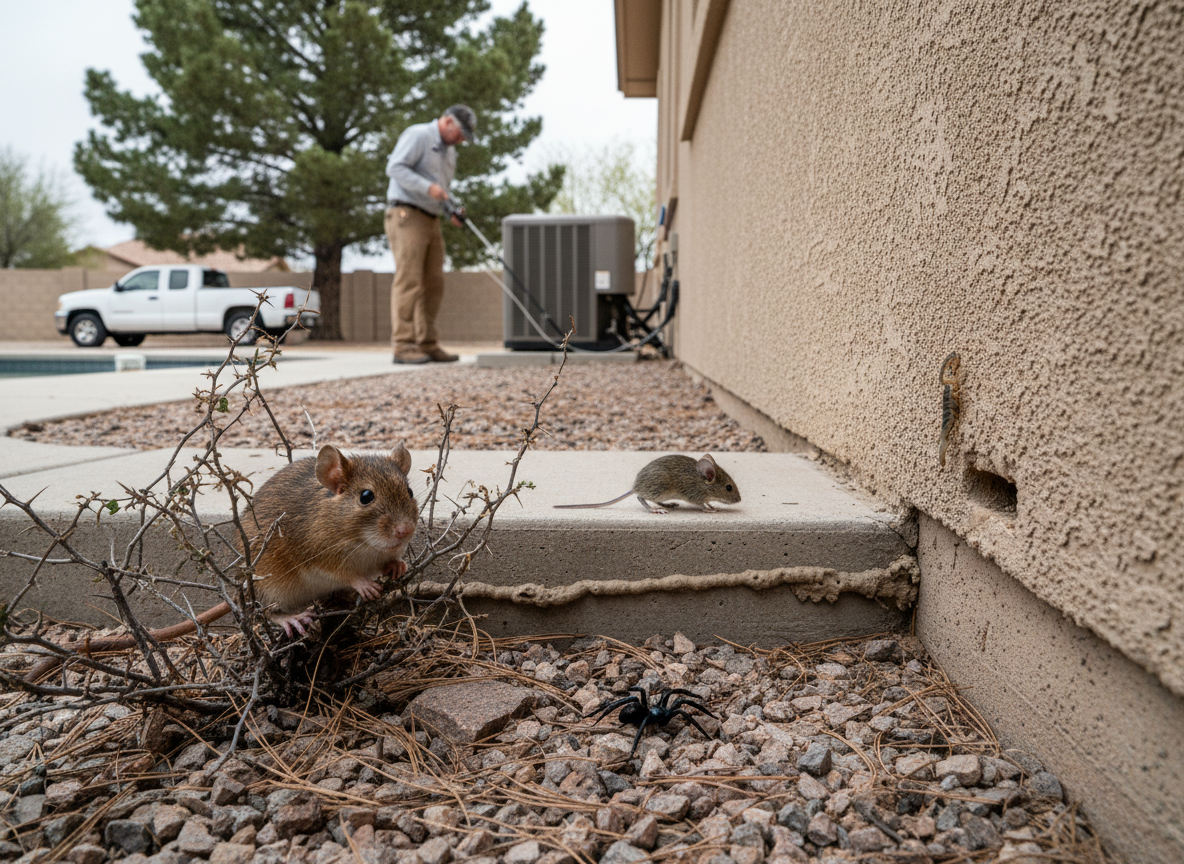
Above 4,000 feet, pack rat control moves from ground-level bait stations to roofline and attic work because of denser tree canopy and rock outcrops, deer mouse activity spikes earlier in fall with the first hard freezes, and kissing bug perimeter treatments must use products that hold up through more frequent summer rains rather than extreme dry heat.
Pack Rats Above 4,000 Feet
Pack rats, also called woodrats, build larger stick nests in juniper and pine stands common around Flagstaff and Prescott. These nests sit higher off the ground than the cactus-based middens seen in Mesa's Red Mountain or Superstition Springs neighborhoods. Technicians therefore spend more time inspecting roof eaves and soffits where rats travel along branches. Bait placement shifts to protected stations under decks or in crawl spaces because cooler nights slow bait acceptance. Home sealing around chimney flashing and attic vents becomes the primary long-term step, especially on older frame homes built before 1990 that dominate those mountain towns.
Deer Mice Season and Entry Patterns
Deer mice move indoors sooner above 4,000 feet once nighttime lows drop below 40 degrees, usually by mid-October instead of late November as in Maricopa County. The shorter growing season pushes them toward stored feed, RVs, and sheds near Riverview Park-style recreation areas. Snap traps and exclusion work replace liquid baits because mice cache food rather than feed steadily. In Mesa the same species stays active year-round due to the hot desert climate, but high-country crews check insulation and stored boxes more often because mice seek warmth inside wall voids once snow appears on the Superstition Mountains horizon.
Kissing Bug Control Adjustments
Kissing bugs appear in lower numbers at elevation yet concentrate around woodpiles and rock walls near Prescott Valley and Apache Junction transition zones. Perimeter sprays must be applied in spring before monsoon moisture arrives rather than during the prolonged dry periods typical in Downtown Mesa. Technicians also focus on pet bedding and outdoor kennels because the bugs follow rodent hosts into those spots. Rodent control remains the foundation step, since removing pack rat nests cuts the kissing bug food source. Home sealing around window screens and dryer vents gains importance where summer storms drive bugs toward lights.
Mesa-Based Perspective on High-Country Jobs
Crews leaving the 2652 E Hopi Ave yard in Mesa notice the work changes as soon as they climb the grade toward higher counties. The same tools and 24-hour availability apply, yet product choice and timing shift with temperature and vegetation. Home sealing and pest exclusion recommendations stay consistent across elevations, though the specific gaps differ between stucco tract homes in Tempe and log or frame structures above 4,000 feet. Readers planning travel or second homes in Flagstaff or Prescott can review the same exclusion checklist used locally before the first freeze arrives.