2026-09-03 ·
Does Pest Control Still Work in Monsoon Season: What Rain Does to a Barrier Treatment
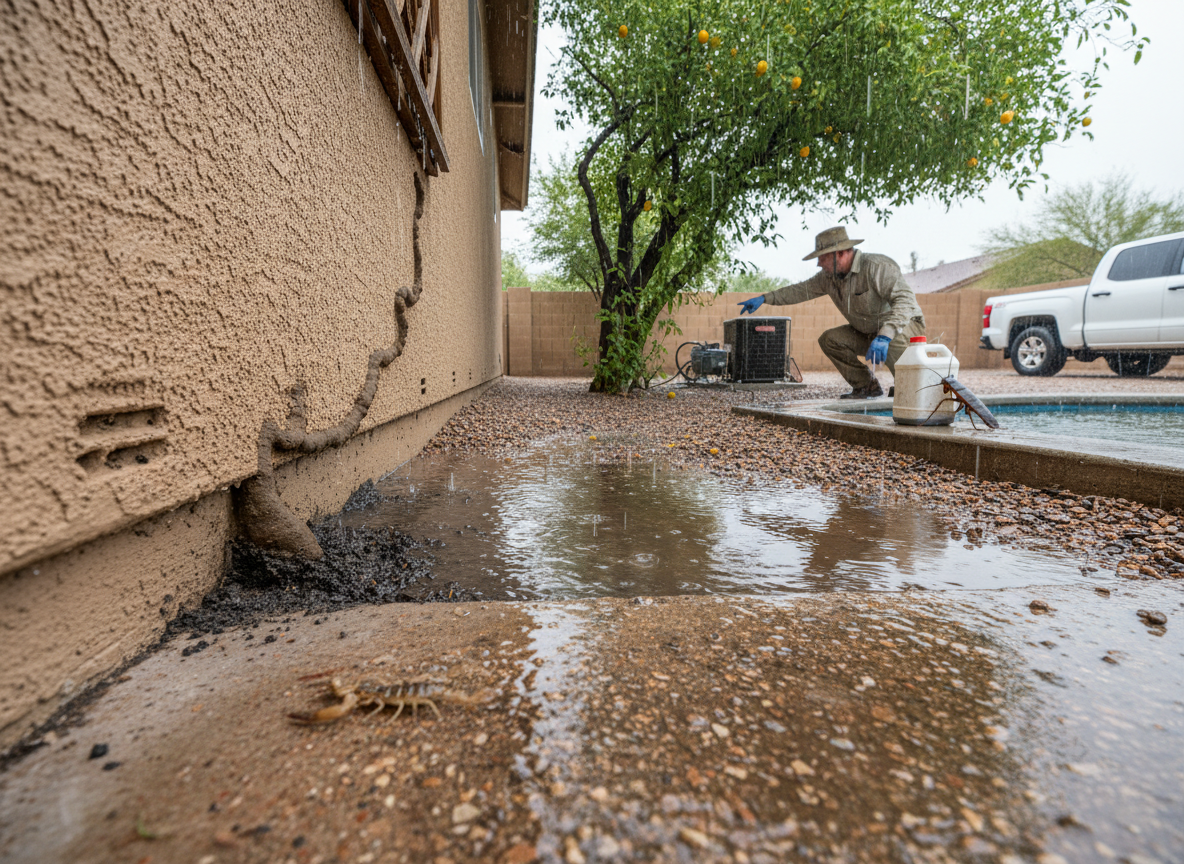
Barrier treatments for pest control in Mesa still reduce scorpion, ant, and spider activity during monsoon season, but heavy rains often cut their effective window from 90 days down to 30-45 days. The product bonds to soil and stucco, yet runoff from roofs and irrigation in areas like Red Mountain and Superstition Springs can move the active layer outward or downward. Reapplication becomes necessary once two or more storms drop more than half an inch within 48 hours.
How Rain Moves the Barrier Chemical
In Mesa’s hot desert climate, the first monsoon downpours hit baked soil and run off fast rather than soak in evenly. This sheet flow carries diluted product away from the foundation line, especially on lots with slopes toward the street in Downtown Mesa. The remaining residue stays concentrated in the top quarter inch of soil, so pests that travel along the base of the wall still encounter it, but the treated band narrows. Homeowners near Riverview Park often notice increased ant trails along the drip line after the third or fourth storm because the outer edge of the barrier has been thinned.
Pests That Increase After Monsoon Starts
Scorpions and ants become more visible once rain softens the ground around the Superstition Mountains and water pools near foundations. Bark scorpions move from rock piles into irrigated yards in Superstition Springs when their normal cover turns muddy. Argentine ants follow the same moisture gradient and establish new trails along expansion joints in older slab homes built in the 1970s and 1980s. A single barrier application applied in late May still knocks down the initial wave, but the second wave after mid-July rains usually requires a targeted interior crack-and-crevice treatment in addition to a fresh perimeter pass.
When to Schedule the Next Service
Check the foundation line after each storm that drops more than 0.4 inches. If you see live ants or scorpions within 3 feet of the house during daylight hours, the outer barrier has been compromised. Most Mesa properties need one additional application between mid-July and mid-September. The second treatment uses the same product but focuses on the lower 6 inches of stucco and the soil immediately against the stem wall, restoring the 18- to 24-inch treated band that monsoon runoff removed.
Practical Steps Between Visits
Clear debris from the 2-foot strip along the foundation so the next application reaches bare soil. Trim vegetation that touches the house; palm fronds and oleander in Red Mountain yards act as bridges once they become wet. Fix irrigation leaks that create constant moisture at the base of the wall—these spots break the barrier faster than any single rain event. Residents in Tempe and Phoenix who follow the same schedule report fewer callbacks after the September storms taper off.