2026-09-03 ·
Black Widows in Weep Holes, Patio Furniture and Pool Pads: Where to Look and What to Do
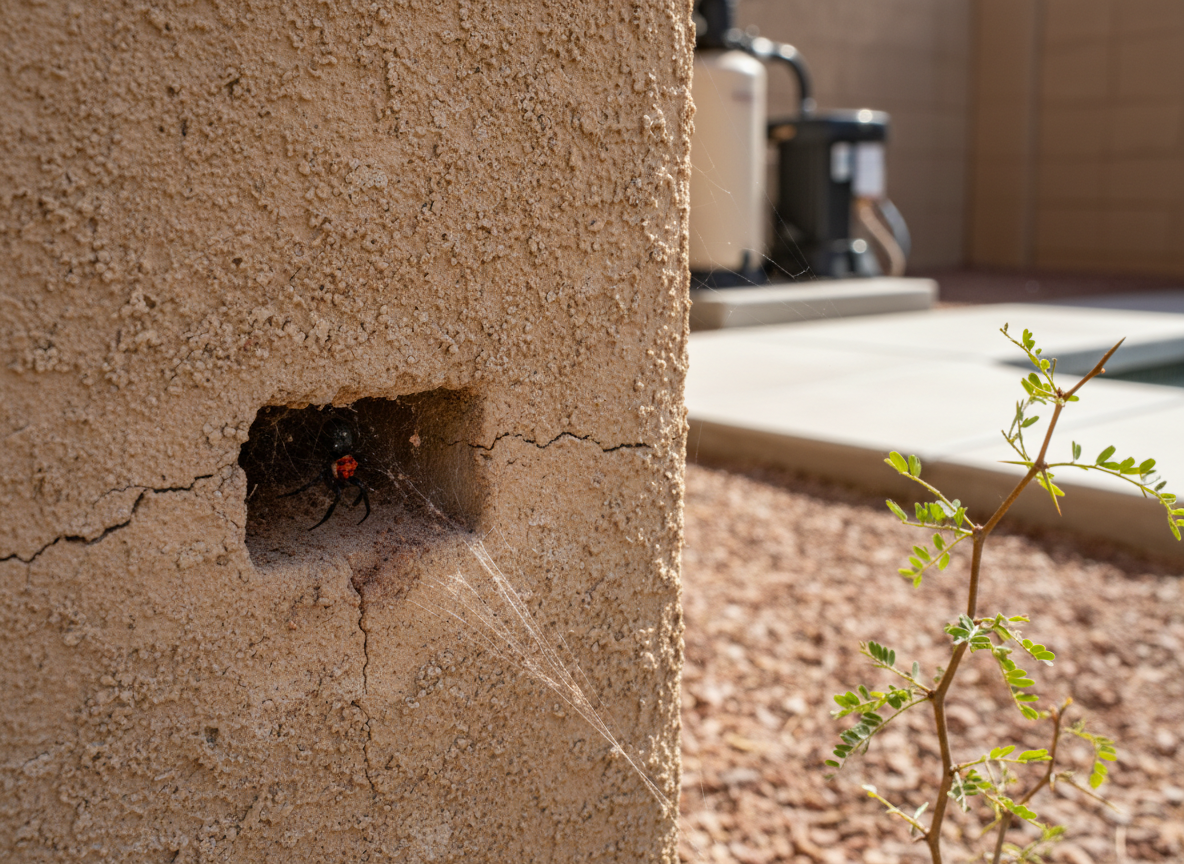
Black widows on an Arizona property are found in the weep holes at the base of the stucco, under patio chairs and tables, and in the gap between the pool pump and the equipment pad, because those spots are low, dark, protected and on the path of the crickets and roaches they eat. Check them with a flashlight at dusk, knock down every web, and treat the harborage rather than the open ground.
The Spider That Matters in Arizona
The black widow (Latrodectus hesperus, the western black widow) is the one dangerous spider across all of Arizona, from Yuma to Flagstaff. The adult female is glossy black with a red hourglass on the underside of a round abdomen, about a half inch in body length. Males and juveniles are smaller, tan and striped, and are often not recognized. Arizona does not have a native brown recluse population; the local relative, the Arizona brown spider, is far less common than people think, and most spiders brought in as recluse are wolf spiders, funnel weavers or sun spiders.
A widow does not roam. She builds a messy, strong, irregular web in a protected spot low to the ground and stays in it, hanging upside down, waiting for a cricket, a roach or a beetle to blunder in. The web is so strong it crackles when you brush it with a stick, which is one way to tell a widow web from any other. She bites when pressed against skin: a hand reaching under a chair, a foot into a shoe left on the patio, a finger into a weep hole or a valve box.
Where They Live on a Typical Lot
Widows want three things: darkness, protection and insect traffic. On a subdivision lot that narrows the search to a short list.
- Weep holes along the base of the stucco, which are dark, protected and on the cricket highway along the wall.
- The underside of patio furniture, especially chairs and tables that sit in the same spot all year.
- The pool equipment pad, in the gap between the pump and the wall, inside the pump housing cover and under the filter.
- Irrigation valve boxes and the water meter box, which are lidded, damp and full of crickets.
- Block wall corners and the wall cap, and the inside of open block cells.
- Sliding door tracks and the corners of exterior door frames.
- Stacked pots, firewood, lumber and stored items on the garage floor against a wall.
- Play structures, grills and hose reels that sit undisturbed.
The pool pad is the single most common widow harborage in a Valley backyard, and it is also the most commonly skipped spot in a hurried treatment.
How to Find Them
Go out at dusk with a flashlight, because that is when the female is out on the web. Look under every piece of patio furniture before you move it. Shine the light along the base of the wall into the weep holes. Pull the pool pump cover. Open the valve boxes. Look in the corners of the garage. A widow web has a funnel of denser silk where she retreats, with egg sacs, tan and papery and about the size of a marble, hanging in it. One female can produce several sacs a summer, each with hundreds of spiderlings.
What to Do
Spraying the open ground does very little for spiders. A widow stands on the tips of her claws, picks up almost no residual walking on a treated surface, and rarely leaves the web anyway. The program that works is physical and targeted.
- Knock down every web and egg sac with a web brush on a pole, and crush or bag the sacs. This is done on every visit because a web left in place is a widow coming back to it.
- Treat the harborage directly with a residual into the weep holes, the block wall corners and cap, under the furniture frames, around the pool pad and pump, inside the valve boxes and along the garage perimeter.
- Treat the food supply. Cricket bait and a residual along the foundation and the lawn edge, and a roach program if the block wall is full of Turkestan roaches. Fewer insects means fewer widows.
- Change the storage habits. Boxes on shelves, not the floor. Firewood off the ground and away from the house. Shoes inside or shaken before wearing. Patio cushions stored.
- Screen the weep holes so they stop being spider and scorpion apartments while still draining.
When It Becomes a Medical Issue
A black widow bite often feels like a pinprick, and the venom takes effect over 1 to 3 hours: cramping in the large muscles of the abdomen, back and legs, sweating, nausea and sometimes chest pain that mimics something worse. It is rarely fatal but it is severe, and it is most dangerous for small children, elderly people and anyone with heart or breathing problems. Wash the bite, apply a cold pack, call Poison Control at 1-800-222-1222, and go to an emergency room for a child, an older adult or severe pain. Antivenom exists and is used for serious cases.
FAQ
Are the brown striped spiders in the same web baby widows? Often yes. Juvenile and male black widows are tan with stripes and look nothing like the adult female. The messy, strong web is the tell.
Will one treatment get rid of them? It brings the count down sharply. Widows come back on lots with heavy cricket and roach pressure, which is why web removal and harborage treatment are repeated through summer on those properties.
Do I have brown recluse? Almost certainly not. Arizona has no native brown recluse population, and the Arizona brown spider is uncommon and found mostly in desert sheds and woodpiles. Bring the spider in a jar for identification rather than assuming.
If there is a widow under every chair on the patio, a spider control visit from Green Ninja Pest Control sweeps the webs, treats the pool pad and weep holes, and cuts down the crickets that feed them.