2026-09-03 ·
Africanized Bees in Arizona: Why a Swarm on Your Wall Is Not a Do It Yourself Job
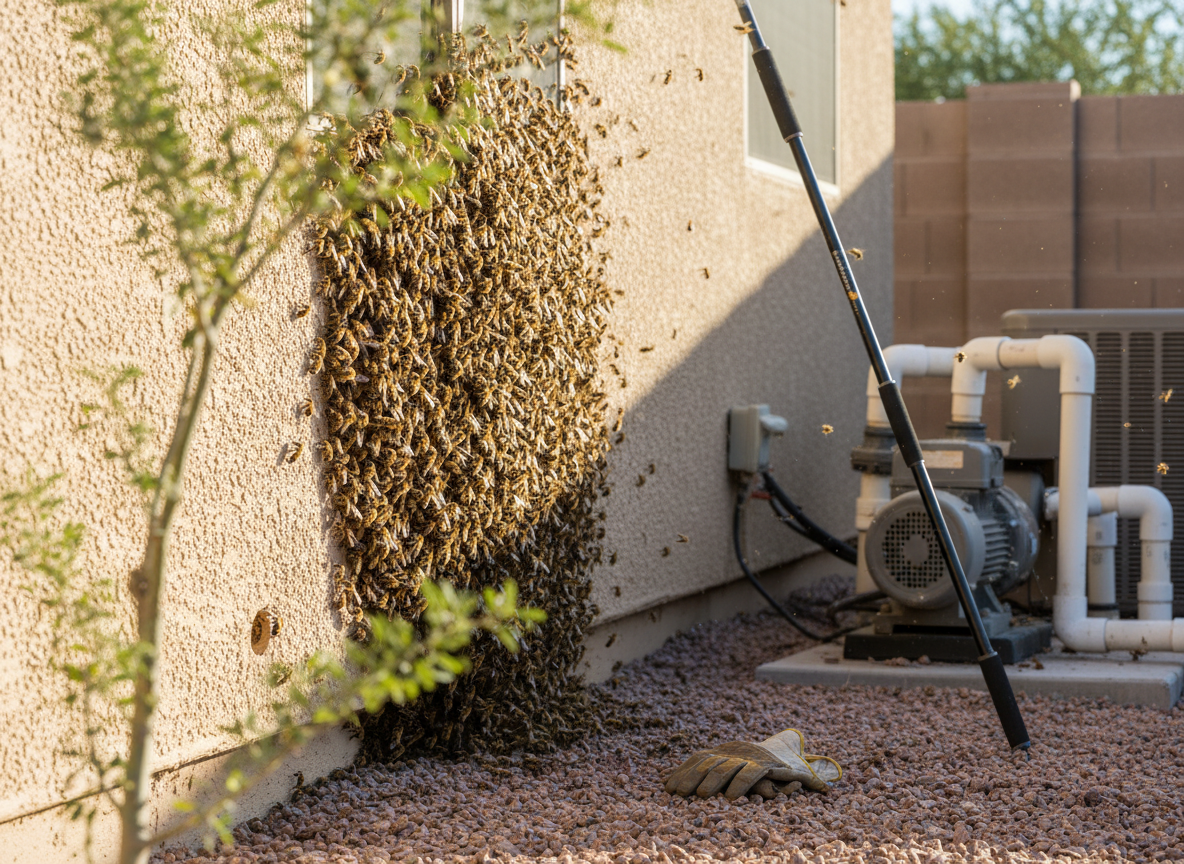
Attempting to remove an Africanized bee swarm from a wall in Mesa yourself risks multiple stings and hive relocation within hours because these bees react faster and in larger numbers than European honeybees. In Maricopa County’s hot desert climate, swarms appear on stucco exteriors and block walls from spring through fall, especially near Red Mountain and Superstition Springs where forage stays available year-round.
Behavior of Africanized Bees in Mesa’s Desert Climate
Africanized bees arrived in Arizona decades ago and now dominate colonies across Maricopa County. They nest in wall voids, irrigation boxes, and abandoned rodent holes more often than managed hives. In Mesa’s extreme summer heat, colonies expand rapidly when temperatures stay above 90 degrees, forcing scouts to seek new cavities in older homes common in Downtown Mesa and around Riverview Park. These bees defend a larger zone around the nest and pursue threats farther than European strains. Residents near the Superstition Mountains see increased activity because desert washes provide water sources that support larger populations. A single wall swarm can contain 10,000 to 30,000 bees that become airborne in under 30 seconds when disturbed.
Why DIY Removal Triggers Attacks
Homeowners who spray store-bought aerosols or knock down visible comb usually split the colony instead of eliminating it. The remaining bees often move a short distance to another void in the same structure, returning weeks later with renewed numbers. In Tempe and Phoenix border areas, DIY attempts have led to multiple emergency calls after bystanders received 20 or more stings during failed efforts. Protective gear sold online rarely covers the neck and ankles adequately against determined Africanized bees. Without vacuum equipment and smoke to calm the colony, any vibration from a ladder or drill sets off a mass response. The hot desert climate keeps bees active at dusk and dawn when most residents try these projects, increasing the chance of incomplete removal.
How Trained Technicians Remove Wall Swarms
Professionals begin by locating the full cavity with inspection tools, then apply targeted dusts that reach every bee inside the void. Vacuum removal follows to extract the cluster without crushing bees that release alarm pheromones. In Mesa homes built before 1990, technicians often cut small access points in stucco or block to extract comb and prevent future nesting. The process typically takes 60 to 90 minutes on site and includes sealing the entry after extraction. Bee and wasp removal teams carry epinephrine kits and work in pairs to monitor for secondary swarms that may form nearby. Follow-up visits confirm no returning scouts have found another opening in the structure.
Long-Term Prevention After Removal
After extraction, sealing gaps larger than 1/8 inch around utility penetrations and rooflines stops new colonies from moving in. Regular residential pest control visits catch early scout activity before a full swarm establishes. Homeowners in Superstition Springs and Red Mountain report fewer issues when irrigation boxes and weep holes receive quarterly checks during the hottest months. Removing standing water sources near foundations reduces the attractants that draw bees into neighborhoods near the Mesa Arts Center. For readers dealing with other desert pests, Roof Rats in Citrus Neighborhoods: How They Get Into Attics and How to Keep Them Out explains similar entry-point strategies that apply to bee prevention as well.
Green Ninja Pest Control operates from 2652 E Hopi Ave, Mesa, AZ 85204 and remains available 24 hours a day, 7 days a week for swarm responses across Maricopa County.