2026-09-03 ·
Home Sealing for Scorpions: The Entry Gaps Most Homeowners Miss
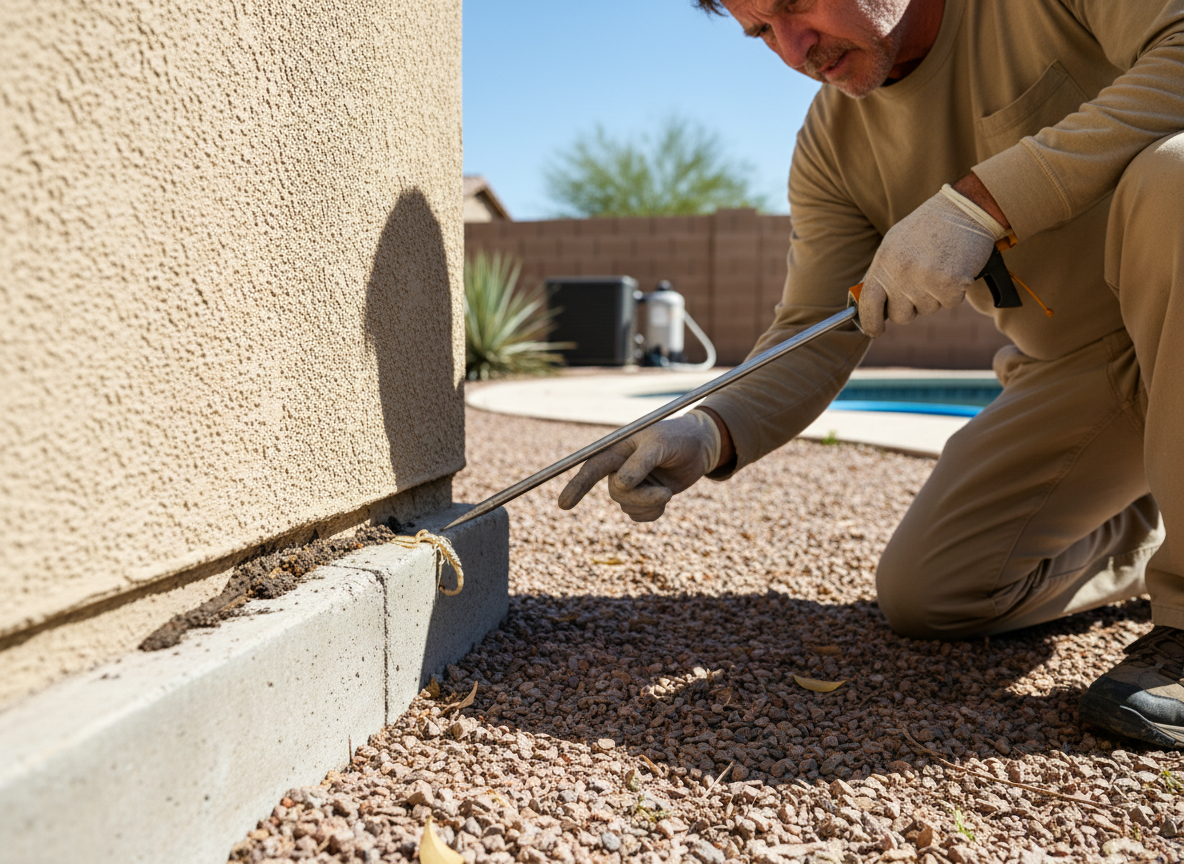
In Mesa's hot desert climate, scorpions enter homes through gaps as narrow as those around pipe penetrations and foundation cracks that most residents overlook when checking doors and windows. These openings become active routes once summer temperatures push scorpions from the surrounding desert terrain into cooler indoor spaces. Homes in neighborhoods such as Downtown Mesa and Red Mountain often feature older stucco construction with settling that widens these paths over time.
Foundation and Exterior Wall Gaps
Mesa homes built on typical Maricopa County lots sit on soil that shifts with irrigation and monsoon rains, creating cracks at the base of exterior walls. Scorpions use these fissures to move from ground cover directly into crawl spaces or slab edges, especially near properties close to Riverview Park where landscaping debris accumulates. Sealing requires inspecting the full perimeter for openings around hose bibs and electrical conduits, then applying appropriate caulk or mesh that withstands the extreme heat without degrading quickly. Residents in Superstition Springs report repeated entries when these base gaps remain unaddressed after initial sightings. Checking for daylight through the foundation joint from inside a garage or utility room reveals many of these hidden routes before they become established trails.
Roofing and Attic Penetrations
The Superstition Mountains create wind patterns that carry scorpions onto rooftops in Mesa, where they drop through unsealed vents and pipe boots on older tile roofs common in Red Mountain subdivisions. Attic access points around chimneys and skylights often measure larger than necessary, allowing easy passage into insulation where scorpions hide during daylight hours. Homeowners can reduce these entries by installing tight-fitting covers over ridge vents and ensuring soffit screens remain intact against the constant dust and heat. Properties near the Mesa Arts Center frequently show scorpion activity in upper levels when roofline gaps connect directly to wall voids. Regular inspection after monsoon season prevents these roof-level openings from becoming primary access routes into living spaces.
Utility Lines and Door Thresholds
Dryer vents, cable entries, and water lines create multiple small openings that scorpions exploit in Mesa's single-story ranch homes and two-story builds alike. Door thresholds in neighborhoods bordering Tempe often sit slightly above grade, leaving space underneath that connects to exterior soil. Sealing these requires weatherstripping combined with door sweeps sized for the actual clearance rather than standard kits that leave room at the corners. Phoenix commuters living in Mesa notice increased activity around garage doors where automatic openers pull in scorpions clinging to the bottom seal. Addressing utility penetrations with expanding foam rated for exterior use stops the majority of these routes without trapping moisture that could damage stucco in the desert heat.
Practical Sealing Steps for Mesa Properties
Start by walking the full exterior during daylight and marking every visible gap with tape for later treatment. Focus first on the service address area around 2652 E Hopi Ave where similar homes share the same construction patterns. Follow up by checking interior baseboards for light leaks that indicate through-wall openings. For ongoing protection, schedule exclusion work through Home Sealing and Pest Exclusion to match materials to local building styles. Readers dealing with repeated sightings can review related guidance in Roof Rats in Citrus Neighborhoods: How They Get Into Attics and How to Keep Them Out for overlapping exclusion techniques. Green Ninja Pest Control remains available 24 hours a day, 7 days a week to assess specific properties when scorpions appear inside despite initial sealing efforts.