2026-09-03 ·
Ants That Come Back a Week After Spraying: Why the Wrong Product Makes Colonies Split
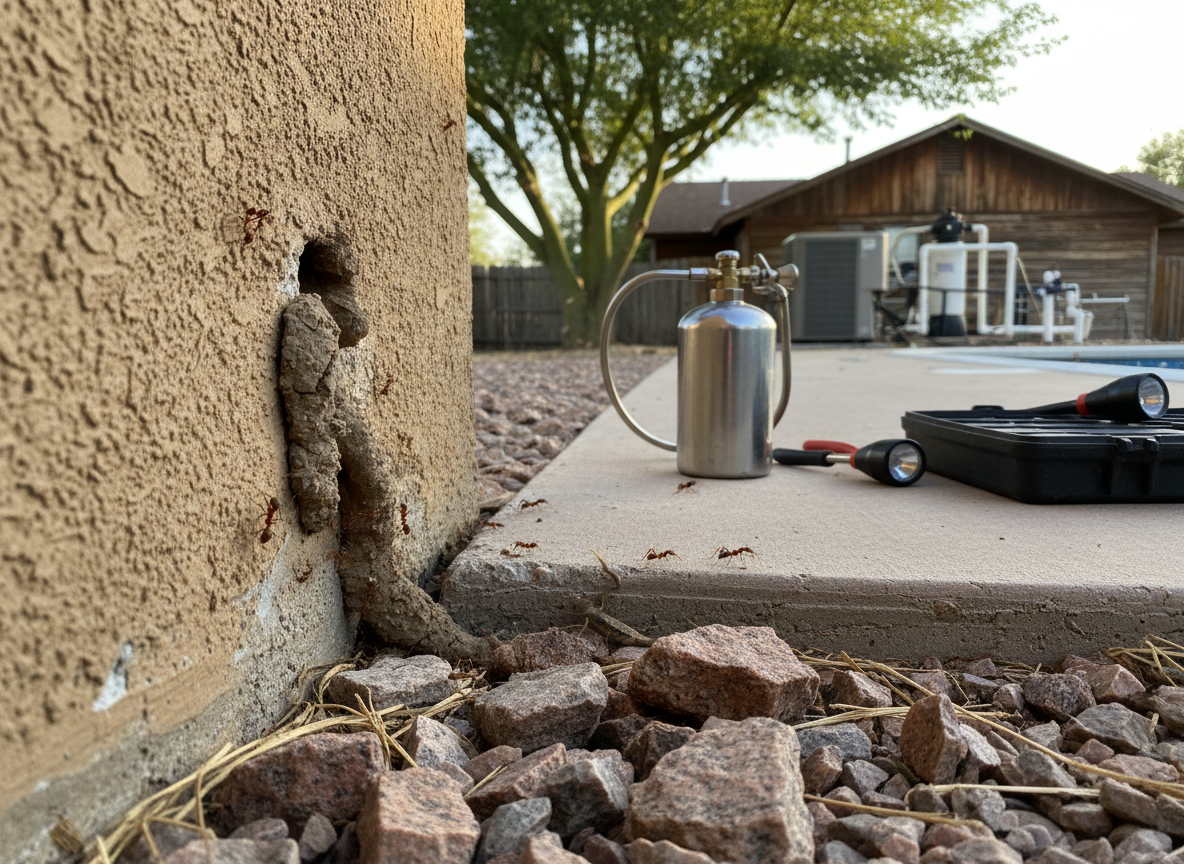
Ants return in 5 to 10 days after a standard spray because contact killers destroy only visible workers and trigger colony budding in species like Argentine ants common across Mesa. The surviving queen or satellite queens then form new nests within walls or under slabs in Red Mountain and Superstition Springs homes, restarting the cycle within a week.
Why Standard Sprays Cause Colony Budding
Contact sprays create a repellent barrier that workers avoid, so the colony divides into multiple smaller groups to escape the treated zone. In Mesa's older Downtown Mesa housing stock built before 1980, cracks in stucco and slab foundations give ants easy routes to split undetected. Homeowners in Superstition Springs often see the same issue after treating patios because the product never reaches the main nest hidden 20 to 40 feet away near irrigation lines. Non-repellent products work differently by allowing workers to carry the active ingredient back to the queen without immediate death, eliminating the budding response. Using the wrong formulation in extreme summer heat above 110 degrees only accelerates the split as ants seek cooler indoor moisture.
Ant Species That Split in Maricopa County
Argentine ants and pavement ants dominate Mesa properties because they form supercolonies with multiple queens. These species thrive along the Salt River corridor and near Riverview Park where irrigation creates consistent moisture trails. Harvester ants near the Superstition Mountains react differently to sprays by abandoning surface mounds and establishing new ones under nearby driveways or sidewalks. In Tempe and Phoenix border neighborhoods, odorous house ants frequently bud after repellent treatments because the colony senses danger and relocates brood to untreated sections of the same structure. Each new satellite nest can contain 1,000 to 5,000 workers within days, making single-spray approaches ineffective in the hot desert climate.
How Extreme Heat Changes Ant Behavior
Mesa's summer temperatures above 105 degrees drive ants indoors through expansion joints and utility penetrations in search of water, increasing the chance that a poor treatment will scatter the colony. Properties near the Superstition Mountains see heightened activity after monsoon moisture because ants follow new water sources into crawl spaces. Homes in Red Mountain with mature landscaping provide shaded foraging paths that let split colonies survive longer between treatments. The combination of heat and dry soil pushes colonies to divide rather than risk exposure on treated surfaces. Operators working 24 hours a day at 2652 E Hopi Ave see these patterns repeat every July and August when residents attempt DIY sprays.
Steps That Reach the Queen Before Budding Occurs
Start with a non-repellent perimeter application followed by targeted bait stations placed along active trails. Monitor stations for 7 days and refresh baits as workers carry material back to the main nest. Seal obvious entry points around plumbing and electrical lines after the initial treatment to prevent new satellite colonies from forming indoors. In Mesa homes, focus on slab edges and expansion joints where irrigation meets the foundation. Follow up with a second bait placement 10 to 14 days later to catch any remaining brood. Professional ant control uses these timed steps to prevent the 5-to-10-day rebound seen with contact sprays alone. Residents dealing with repeated sightings can also review how desert food chains affect other pests in the article Crickets Are the Reason You Have Scorpions.